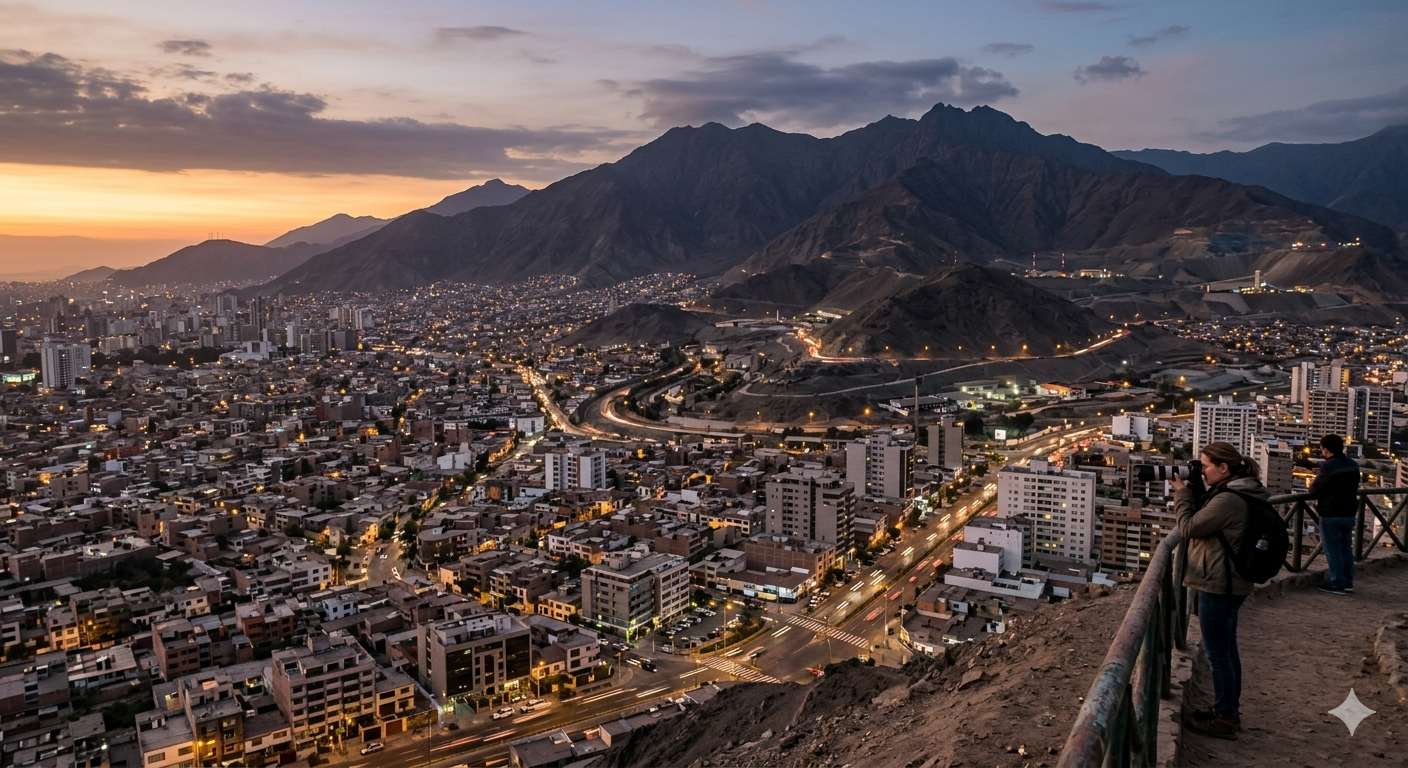
Peru votes tonight for its ninth president in a decadeApril 12, 2026. On a Sunday across a country stretching along South America’s Pacific coast, from the sand-colored deserts of the north to the glaciers of the south, Peruvians are casting their ballots. Whenever I hear the figure, ninth president in ten years, I feel something close to a sigh. Is this the degradation of democracy, or is it the expression of a political culture peculiar to Latin America? Before rushing to answers, I want to look at this country through its relationship with Japan and through the history that binds them. Al Jazeera has reported long lines at polling stations in Lima from the morning of April 12.
A staggering turnover at the topSimply listing the names conveys the depth of Peru’s political crisis. Ollanta Humala, Pedro Pablo Kuczynski, Martin Vizcarra, Manuel Merino, Francisco Sagasti, Pedro Castillo, Dina Boluarte. Tonight, a new name will join that list. Corruption, impeachment, resignation, an attempted self-coup, congressional dissolution, deadly crackdowns on protesters. Each presidency has carried its own tragedy, and none has completed a full term without catastrophe. Few contemporary democracies have seen such a dizzying churn at the top.
Historical currents beneath the crisisTo dismiss Peru’s current disarray as the sum of individual political failures is shallow. The country emerged into the twenty-first century carrying unresolved fractures between a coastal elite, an Andean highland population of largely indigenous origin, and the diverse communities of the Amazon region. The 1980s brought hyperinflation under Alan Garcia. The Fujimori years brought neoliberal reforms. Subsequent decades saw resource booms and busts that lifted some and left others behind. Castillo’s 2021 victory crystallized decades of accumulated resentment. But his December 2022 attempt to dissolve congress and seize executive power destroyed the legitimacy of the left at the moment of its greatest opportunity.
The shadow of the Boluarte government and impeachmentAfter Castillo’s arrest, Vice President Dina Boluarte rose to the presidency, initially offering hope of stabilization. Instead, the security forces’ violent response to protests in the southern Andes killed dozens of civilians. International human rights organizations issued sharp condemnations. Corruption allegations accumulated. Boluarte’s approval ratings sank to historic lows. From 2023 through 2024, opposition forces pushed actively for her impeachment, though formal impeachment proceedings ultimately did not materialize. Still, parliamentary antagonism deepened severely, and the government’s policymaking capacity deteriorated markedly. Americas Quarterly has repeatedly argued that Peru’s mining-region unrest is directly linked to the legitimacy crisis of the central government. Peru’s political crisis is not merely a struggle in the capital. It reflects a rupture between national governance and the daily lives of communities far from Lima. By late 2024 and into 2025, as Boluarte’s presidency entered its final months, governmental dysfunction reached acute levels. Few observers expected her to seek reelection, and fewer still anticipated a smooth transition.
Peru as seen from JapanNow let us shift perspective. What does Peru look like from Japan? For the average Japanese citizen, the name evokes Machu Picchu, the Nazca lines, and former President Alberto Fujimori. For Japanese industry, however, Peru wears a different face entirely. It is a country of copper, of zinc, and of lithium potential. Sumitomo Metal Mining operates the Cerro Verde copper mine, one of the world’s leading copper producers. Mitsubishi Corporation is a major stakeholder in Las Bambas, another giant of Peruvian copper exports. Mitsui Corporation and JOGMEC, Japan’s Oil, Gas and Metals National Corporation, are deeply engaged in mineral development across the country.
Resources for the EV era and climate imperativesWhy do these mines carry such particular weight today? The answer is simple. The global transition to electric vehicles and renewable energy has exponentially raised demand for copper and lithium. An EV contains several times more copper than a conventional car. Power grid reinforcement, solar installations, wind turbines: all require vast amounts of copper. As Japan pursues carbon neutrality by 2050, stable copper supply sits at the core of national strategy. Simultaneously, as climate adaptation and mitigation accelerate worldwide, the geopolitical significance of resource-rich countries like Peru has grown dramatically. Prolonged drought in the Andean highlands is already affecting mining operations themselves. Competition over water resources, energy production, and mineral extraction is emerging as a central flashpoint in Peru’s domestic politics and international relations. China’s rapidly expanding investment and diplomatic engagement in Peru, driven by the same considerations, has become a matter of real concern in Tokyo.
Las Bambas and the struggle for influenceLas Bambas is one of Peru’s crown jewel mines. Situated along the border between Cusco and Apurímac regions, this vast extraction site produces over half a million tons of copper annually. Mitsubishi Corporation is a principal shareholder, and the mine’s stability is strategically vital to Japan’s mineral security. Yet the communities surrounding the mine have suffered from environmental pollution and economic injustice. Between 2020 and 2022, massive strikes by local residents forced the mine to suspend operations repeatedly. Under the Castillo government, politically organized indigenous groups championed these protests and demanded higher tax burdens on mining companies. The Boluarte administration made little headway toward resolution. Meanwhile, China has seized upon this turbulence to expand its investments and corporate control over Peruvian mining enterprises. Reports have circulated that Chinese firms have explored acquiring additional stakes in Las Bambas itself. Japan’s sense of erosion in relative influence runs deep. The competition between Tokyo and Beijing over mining assets in Peru is no longer a distant abstraction but an immediate geopolitical contest with large stakes.
A century of Nikkei presenceYet there is another lens we cannot neglect: the Japanese-Peruvian, or Nikkei, community. When the Sakura Maru arrived at Callao port in 1899, the first group of Japanese immigrants began a new life. More than two hundred thousand Japanese eventually migrated to Peru over subsequent decades. Sugar plantation labor was brutal and exploitative. Discrimination was relentless. During the Second World War, forced deportations tore families apart. Postwar reconstruction was slow and uncertain. Through these ordeals, the Nikkei community gradually extended its presence from agriculture into commerce, finance, and eventually politics itself. Over a century, Japanese-Peruvians have maintained a distinct cultural identity while integrating steadily into Peruvian society. After World War II, especially from the 1970s onward, Japan’s economic rise prompted Japanese enterprises to expand operations in Peru rapidly. Today, Japan’s economic footprint in Peru reflects not merely individual corporate ventures but rather the accumulated historical depth of Nikkei presence stretching back to the turn of the twentieth century.
The Fujimori era and the Nikkei communityThat presence reached its symbolic peak when Alberto Fujimori, son of an agricultural technician, won the presidency in 1990. Within Peru’s nationalist political elite of the 1980s, his emergence was unique. His victory over hyperinflation and his dismantling of the Shining Path guerrilla organization earned him significant popular support. For the Nikkei community, his election was a moment of profound symbolic achievement. His governance mixed neoliberal economic reform with authoritarian enforcement of order. At the same time, he dissolved congress, rewrote the constitution, oversaw forced sterilizations, and implemented eugenicist policies targeting indigenous women especially. His regime perpetrated state violence in the shadows. These actions violated democratic norms and human rights in profound ways. That legacy still runs beneath the surface of Peruvian politics. The split between Nikkei business elites who benefited from Fujimori’s economic growth and progressive intellectuals appalled by his authoritarianism created deep fissures within the Nikkei community itself, fractures that have never fully healed.
The populist legacy and the Fujimori familyAlberto Fujimori was later imprisoned on corruption and human rights charges. Yet his daughter Keiko Fujimori has repeatedly run for the presidency at the head of the Fuerza Popular party. In 2016 and 2021, she advanced to the final round only to lose narrowly. Those defeats reveal something about Peru’s populist depths. Keiko’s political style adroitly deploys her father’s legacy while articulating anti-establishment rhetoric. Her brother Kenji continues his own parliamentary career. The Fujimori name functions as a polarizing symbol in Peruvian politics, evoking both intense support and intense revulsion. Today’s election is unavoidably shaped by the movements of Fujimori-aligned forces. If Castillo’s rise represented left-wing populism, the Fujimori family’s persistent influence represents conservative populism. From both flanks, challenges to existing institutions have returned again and again. This structural pattern, not individual personalities, explains the frequent turnover of presidents. Peru’s populism is not a passing phenomenon but an embedded feature of its contemporary politics.
A Latin American democratic crisisWe should not shrink Peru’s troubles to a uniquely Peruvian story. Venezuela’s authoritarian consolidation, Nicaragua’s slide into one-party rule, Bolivia’s recurring political instability, Ecuador’s security crisis, Mexico’s struggle with organized crime. Across Latin America, democratic governance is under structural strain. Populist surges, anti-establishment anger, a shrinking middle class, erosion of judicial independence. These shared symptoms reflect the exhaustion of neoliberal formulas and the collapse of trust in the social contract itself. Into these fissures, Chinese economic and political influence has expanded. Belt and Road projects, resource deals, infrastructure finance. As U.S. engagement has weakened in relative terms, Latin America has become a more multipolar theater. Peru stands at the front lines of this geopolitical reorientation.
Lithium, water, and the climate nexusBeyond copper and zinc, Peru’s southern regions hold world-class lithium reserves. The lithium deposits in the Atacama salt flat regions, though less publicized than those of Chile and Argentina, will assume critical importance as global lithium demand is projected to double over the coming decades. Yet lithium extraction requires vast quantities of water, creating direct competition with agricultural communities and indigenous populations for scarce freshwater. As climate change accelerates drought across the Andes, this resource conflict will intensify sharply. When Japanese enterprises consider investing in Peruvian lithium development, they cannot ignore this structural dilemma. The tension between climate-driven energy transition and water-driven social survival is becoming the defining political challenge of Peru’s future. Whoever occupies the presidency in Lima will face this contradiction without easy resolution.
The temptation of populismIt is easy to label Castillo’s rise as left populism and leave it at that. But understanding why he gained support requires moving beyond ideological shorthand. Andean poverty, frustration with economic policies centered on Lima, profound disillusionment with established parties. When these conditions converge, challengers to the existing order inevitably emerge. The question is whether they reform institutions or attempt to shatter them. Castillo chose the second path, and in doing so damaged the credibility of the broader left. Whichever candidates are most competitive in today’s race, the same temptations and the same traps lie ahead. Reform demands time and patience. Populism promises rapid resolution. For the desperate, that allure is nearly irresistible.
Japan’s engagement questionHow should Japan respond? To seek political stability only for the sake of securing its own mineral supplies would be too narrow a vision. Japan has long engaged with Peru through Official Development Assistance, supporting infrastructure, education, and health initiatives. JICA experts have contributed to administrative capacity and regional development. Strengthening such long-term engagement seems more important than ever. Beyond extracting copper and lithium, Japan can offer patient support to Peruvian citizens as they work to rebuild their institutions. In this context, the Nikkei community stands as a valuable human bridge between the two nations. The accumulated trust and human networks built over nearly a century constitute a civilizational asset, not merely a commercial one.
A positive scenarioSuppose the election produces a president willing to tackle institutional reform and capable of building cooperative relations with congress. Constitutional amendment, electoral reform, stronger decentralization, anti-corruption measures. If such structural reforms progress, investor confidence could gradually return and mining operations could stabilize. For Japanese firms, the benefit of secure copper supply would be substantial. Northern Peruvian mining development would accelerate. For ordinary Peruvians, rising living standards and a renewed sense of political participation could become visible. For Latin America as a whole, Peru becoming a model of democratic stabilization would carry considerable weight. The Nikkei community could devote itself to cultural transmission to younger generations and to deepening Japan-Peru relations within a more stable environment.
A pessimistic scenarioYet I cannot fully embrace that optimism. The experience of the past decade suggests that whichever candidate prevails, Peru’s political institutions tend to consume their leaders. Conflict with congress, corruption scandals, fragmentation of social movements, and eventual collapse. This cycle cannot be broken without deep institutional change, and such change demands political capital and time horizons that few Peruvian leaders have managed to secure. Whether tonight’s winner can carry that burden remains uncertain. If the old pattern repeats, another election will arrive within a few years. Community distrust will deepen, strikes will multiply, mining operations will become even more unstable. China’s influence will continue its steady expansion. By the time Japan looks up, its options may have narrowed dramatically.
The future of the Nikkei communityWithin this uncertainty, how will the Nikkei community evolve? Will the Fujimori family’s political influence expand again, or will a new generation find different roles in civic life? From Japan, the Nikkei community is far more than a group of overseas compatriots. It is a cultural and economic bridge. Among the voters walking to polling stations today are many Nikkei Peruvians whose ballots fuse the memory of ancestral migration, the reality of present-day life, and the hope of a future their parents and grandparents imagined. A century ago, standing before the Andean mountains, in a land of utterly foreign language and custom, their ancestors forged a way of living. That handiwork endures today in the Peruvian electorate. We cannot adequately discuss Peru’s future without feeling the weight of that continuity.
The Shining Path legacy and contemporary security challengesTo understand why Peru’s political instability persists, we must reckon with a shadow that still falls across the country: the Shining Path guerrilla organization. Sendero Luminoso dominated Peru’s southern highlands from the 1980s through the early 2000s, leaving nearly seventy thousand dead in a conflict that was brutal beyond measure. Fujimori’s victory over the organization earned him international credibility and domestic support. Yet the legacy of that conflict runs far deeper than the numbers suggest. Entire regions were militarized. Entire communities were traumatized. Trust between local populations and the state was shattered in ways that decades have not fully healed. Even as the organization’s direct military capacity was dismantled, its ideological residue persists in Peruvian political discourse. Radical left candidates can still invoke Sendero’s anti-capitalist rhetoric, however carefully. Indigenous communities in the highlands remain wary of state authority, remembering decades when government soldiers were indistinguishable from terrorists. The security sector itself, enlarged and empowered during the anti-insurgency campaign, has never fully demilitarized its approach to domestic order. When contemporary presidents resort to heavy-handed crackdowns on protests, they are drawing on institutional habits formed during the fight against Shining Path. This means that Peru’s political violence is not merely a contemporary phenomenon but a reverberation of conflicts that should have ended two decades ago.
The informal economy and structural inequalityA crucial context that shapes Peru’s political volatility is the structure of its economy itself. Approximately seventy percent of Peru’s working population operates in the informal sector, meaning outside of formal employment contracts, tax systems, and labor protections. These are street vendors, small traders, agricultural day laborers, construction workers without contracts. They form the numerical majority of Peru’s electorate. When a candidate promises to overturn the existing economic system, he or she is speaking directly to a population whose daily survival is precarious and whose formal political representation has historically been weak. Castillo’s appeal lay partly in his promise to redistribute mineral wealth and to formalize the informal economy. Yet once in office, he discovered that the structural forces keeping such a large portion of the workforce informal are deeply embedded in Peru’s economic geography and global position. The informal economy is not simply a sign of underdevelopment. It is functional. It absorbs labor that would otherwise be unemployed. It keeps labor costs low for Peru’s export-oriented mining and agricultural sectors. It provides flexibility in a volatile global economy. But it also means that most Peruvians live without safety nets. Health care, pensions, education costs come directly from irregular earnings. In such conditions, political temptation toward rapid redistribution or radical restructuring is powerful. Yet radical change destabilizes the informal economy’s precarious equilibrium. Remittances from family members abroad, informal credit networks, and access to small traders all depend on a degree of predictability. When political crisis arrives, the informal worker is often the first to suffer.
Quellaveco, EPA diplomacy, and Japan’s mineral strategy in PeruTo trace Japan’s engagement with Peru’s mining sector is to understand a relationship that runs much deeper than current geopolitics might suggest. In 2012, Japan and Peru concluded an Economic Partnership Agreement, a bilateral trade framework that reflected decades of accumulated economic ties. That same year, Mitsui Corporation was advancing its massive Quellaveco copper project in southern Peru, a mine that would ultimately produce some 345,000 tons of copper annually once fully operational. Quellaveco represents exactly the kind of large-scale, long-term, capital-intensive project that Japanese trading companies specialize in. It requires political stability, predictable regulatory environments, and cooperative labor relations. It requires trust. The Quellaveco project also exemplifies Japan’s approach to resource security: rather than seeking outright ownership or control, Japanese companies typically work as equity partners in consortiums, often bringing not only capital but also technical expertise, project management, and market access. The 2012 EPA reflected this strategic partnership. But it also reflected something else: Japan’s recognition that Peru’s development and Japan’s resource security are mutually dependent. Investment in Peru’s mining capacity benefits both nations. Yet that interdependence is precisely what is being tested as Peru’s political stability erodes and as China emerges as a competing investor.
China’s Chinalco Toromocho mine and the geopolitical pivotThe most visible symbol of Chinese competition for Peru’s mineral wealth is the Toromocho copper mine, majority-owned by China’s state-backed Aluminum Corporation of China (Chinalco). Located in the central highlands, Toromocho produces over 300,000 tons of copper annually and has become one of Peru’s largest foreign-invested mining operations. China’s entry into large-scale copper mining in Peru occurred during the commodity boom of the 2000s, when rising demand from Chinese industrialization drove global copper prices upward. For Peruvian governments and mining regions, Chinese investment seemed like a windfall. China brought capital when it was plentiful and commodity prices were strong. Chinese companies operated without the strict environmental oversight that European or Japanese investors faced at home. They hired many Peruvian workers, often at wages higher than local agricultural income. Yet as China’s economy has shifted and as commodity prices have cycled downward, the social and environmental costs of Chinese mining have become more visible. Conflicts between Toromocho operations and Andean water resources have escalated. Local communities argue that the mine contributes to the same water scarcity that imperils agriculture and daily life. Chinese firms have been less responsive to such complaints than their Japanese or European counterparts, partly because they answer to state stakeholders in Beijing rather than to public shareholders in democratic societies. The presence of Chinalco in Peru represents not merely a commercial competition but a fundamental difference in how mining is governed and who bears its costs and benefits.
Remittances, diaspora economics, and the informal lifelineOne more factor that shapes Peru’s political economy deserves explicit attention: the role of remittances from Peruvians working abroad. Millions of Peruvians have emigrated to the United States, Spain, Italy, Japan, and other countries in search of better wages and stable employment. The money they send home—over three billion dollars annually in recent years—constitutes a critical lifeline for families left behind, particularly in rural and indigenous communities. Remittances fund education, health care, small business, and housing improvements in ways that government spending often does not. In effect, remittances are a form of family-based social safety net that substitutes for absent state provision. This creates a peculiar political dynamic. When Peruvian voters in the highlands demand radical restructuring of the state and economy, they often have relatives abroad whose earnings in foreign currencies are sustaining them. Conversely, political instability and economic turbulence in Peru depress remittance flows because migrants earn less and unemployment abroad rises with global economic cycles. The 2020 pandemic and the political crisis of 2021-2023 coincided with a decline in remittances, deepening economic distress precisely when political demands for radical change were most intense. Remittance economics also connects Peru’s domestic politics to global migration policy, labor markets, and demographic change. Japanese communities in Peru—descendants of migrants from a century ago—understand this intimately. The transmission of resources and information between Peru and Japan through family networks is a form of transnational economy that precedes contemporary globalization by generations.
A closing questionWhen the results arrive tonight, what will we actually see? Merely a new presidential name, or the faint outline of institutional change? Or another repetition of the old pattern of chaos? The answer will emerge gradually, in the faces of citizens leaving polling stations and in the months and years that follow. For Japan, the essential challenge is to stop treating Peru solely as a supplier of copper and zinc and instead to engage with it as a complex democratic society deserving patient, long-term partnership. In a world where climate change accelerates, Peru’s stability and development are inseparable from global sustainability. Copper and lithium are merely the tools. What is truly at stake is whether Japan can muster the intellectual honesty to confront Peru’s complexity with sincerity. And through the precious bridge of the Nikkei community, can the two nations build a relationship that is deeper and more equal? Is that not what this moment is asking of both?
この記事を書いた人
灰島
30代の日本人。国際情勢・地政学・経済を日常的に読み続けている。歴史の文脈から現代を読むアプローチで、世界のニュースを考察している。専門家ではないが、誠実に、感情も交えながら書く。


コメント