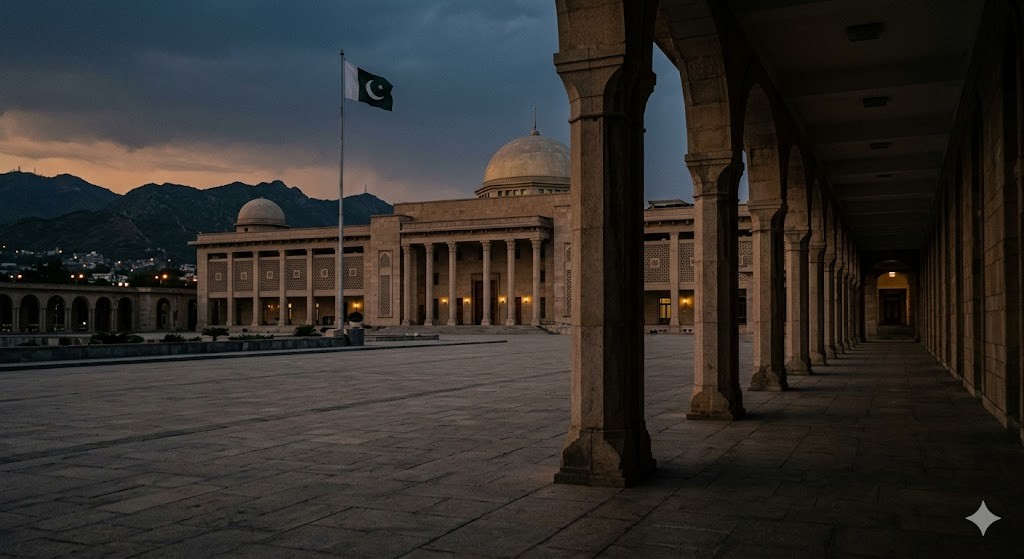
Pakistan becomes the unlikely conduitOver the past few days, a small diplomatic news item tucked away in the margins of international reporting has captured my attention. In Pakistan’s capital city of Islamabad, the United States and Iran are conducting high-level negotiations behind closed doors. Reuters reported on April 11th, citing multiple diplomatic sources, that direct talks between the two countries have begun in Islamabad. After a year marked by escalating tensions around the Strait of Hormuz and a relentless cycle of sanctions and counterattacks, many observers are tempted to view this development optimistically, as if, finally, dialogue has a chance. But we must resist that temptation. Beneath the surface of this diplomatic initiative lies a complex tangle of historical mistrust, geopolitical contradiction, and very real consequences for Japan’s energy security and economic stability.
The escalation cascade of the past yearRoughly twelve months ago, military tensions surrounding the Strait of Hormuz began escalating with alarming speed. Drone attacks by Iranian proxy militias against U.S. military installations were met with American air strikes. A series of escalatory exchanges created a genuine risk that the strait, through which nearly one quarter of the world’s oil transits, could be partially or completely closed. Japanese shipping, alongside vessels from other Asian-Pacific nations, faced real threats during this period. Oil prices spiked, LNG procurement costs rose sharply, and Japan’s power utilities scrambled to manage surging fuel acquisition expenses. CNN’s reporting highlighted that the Strait of Hormuz accounts for approximately twenty-five percent of global petroleum trade, making it one of the world’s most strategically critical chokepoints. When such a vital artery of global commerce faces blockade risk, the entire world economy holds its breath.
Washington’s pragmatic recalibrationToward the end of last year and into the early months of 2026, faint signals of a shift in American Middle East policy began to emerge. A new administration has taken stock of the nation’s defense posture and strategic priorities. Within this broader reassessment, there is a clear preference to reduce long-term military commitments in the Middle East. The calculus is straightforward: an all-out war with Iran serves no strategic interest. Instead, the logic goes, exploring limited dialogue and establishing informal ground rules might help protect American military personnel and supply lines while maintaining minimum regional stability. The United States wants to manage the risk, not eliminate it, and management often requires talking.
Tehran’s economic desperationIran, meanwhile, has endured years of relentless economic sanctions while pursuing its nuclear development program. The results have been mixed at best. Sanctions have intensified, yet Iran’s economy continues to deteriorate. Double-digit inflation has eroded purchasing power, living standards have declined, and the prospect of sustained confrontation with Washington offers no path to relief. This economic pressure creates an incentive for dialogue, specifically, the possibility of partial sanctions relief or limited commercial arrangements. However, Iran’s internal politics complicate matters tremendously. Hard-line military factions remain deeply opposed to negotiations with the Americans, and any negotiating team must navigate treacherous domestic political waters. Talking to Washington is, in the eyes of Iran’s revolutionary guard and other security apparatus factions, a form of capitulation. Yet the economy cannot withstand indefinite isolation.
Pakistan’s difficult balancing actPakistan, the would-be mediator in this affair, occupies an extraordinarily delicate position. It maintains economic and military relationships with the United States while sharing a lengthy border with Iran. Pakistan is also wrestling with its own economic crisis and has become dependent on bailouts from the International Monetary Fund. In taking on the mediation role, Pakistan signals loyalty to Washington while trying to avoid alienating Tehran. Yet this balancing act is precarious. Pakistan’s own economic fragility and political instability undermine its credibility as a neutral arbiter. Can a nation struggling with its own survival really serve as an impartial mediator between two regional powers with existential stakes in the outcome? The question answers itself.
The chasm of historical distrustPerhaps the most sobering observation is that the simple act of both parties sitting down at a table in Islamabad does nothing to bridge the historical mistrust separating Washington and Tehran. That mistrust stretches back to 1979, deepened by the CIA-orchestrated coup against Mohammad Mosaddegh in 1953 and the subsequent hostage crisis at the U.S. embassy in Tehran. Nuclear agreements have been signed and abandoned. Sanctions have been imposed and negotiated over, only to be reimposed. Proxy conflicts in Syria, Iraq, Yemen, and Lebanon have seen the two powers locked in a grinding competition. A single round of talks, or even multiple rounds, does not erase four decades of animosity.
Incompatible end states remainMore fundamentally, the two sides appear to be seeking incompatible outcomes. The United States wants to constrain Iran’s nuclear capabilities and limit Tehran’s regional influence. Iran wants complete sanctions relief, recognition of its national sovereignty, and acknowledgment of its legitimate sphere of influence in the Middle East. These objectives are not easily reconciled. The United States views Iran as a destabilizing force; Iran views American demands as a denial of its rights as a regional power. When the fundamental goals diverge this profoundly, diplomatic breakthroughs become extraordinarily unlikely, no matter how many envoys meet in how many capitals.
Why Japan must watch intenselyFor Japan, the importance of these negotiations extends far beyond academic interest in diplomatic procedure. The reason is stark and somewhat tragic. Japan depends on the Middle East for approximately ninety percent of its crude oil imports, and the vast majority of that oil transits through the Strait of Hormuz. The security of this waterway is, in essence, a critical artery of Japan’s economic circulatory system. Disruptions reverberate through every sector. When the Suez Canal faced attacks or the Strait of Hormuz experienced heightened tensions during 2023 and 2024, oil prices surged and LNG procurement costs climbed accordingly. Japan’s power companies absorbed these escalating costs, which then flowed through to household electricity bills. The transportation and logistics sectors saw their fuel surcharges increase dramatically, squeezing already thin margins. Japanese policymakers learned from this experience. Today, their attention to Hormuz security is acute and unremitting.
Immediate market implicationsThe trajectory of these negotiations will have direct consequences for energy markets. Should the talks progress and market participants grow confident that Hormuz transit risks are diminishing, petroleum futures prices would face downward pressure. Brent crude currently hovers around eighty-five dollars per barrel; a genuine reduction in strait-closure risk might drive prices into the seventy-dollar range. Conversely, if negotiations collapse and conflict risks rise again, prices could spike above one hundred dollars in a matter of weeks. LNG prices track alongside crude oil prices, which means Japan’s domestic electricity rates hang in the balance. Power companies and their industrial customers are acutely aware of this linkage.
Currency market spillover effectsThe secondary impacts on currency markets warrant equal attention. Rising oil prices generally strengthen the U.S. dollar, since petroleum is globally priced in dollars and increased oil demand raises dollar demand. Falling oil prices produce the opposite effect. The yen-to-dollar exchange rate profoundly affects Japan’s export competitiveness. A weaker yen helps Japanese manufacturers competing globally but increases the cost of imported raw materials and energy. The fate of these Iran-U.S. negotiations thus ripples across Japan’s macroeconomic balance sheet. This is not a geopolitical sideshow; it is central to Japan’s economic health.
Cultural and historical foundations of mistrustTo grasp the depth of this impasse requires understanding the historical backdrop. The 1953 coup orchestrated against Prime Minister Mohammad Mosaddegh remains seared into Iranian national memory as evidence of American imperial ambition. The 1979 hostage crisis became, for Americans, proof of Iranian hostility and irrationality. Decades of sanctions, proxy conflicts, and rhetorical hostility followed. Each episode added another layer to the wall separating these two societies. On the American side, Iran is viewed through the lens of the so-called Islamic theocracy: hostile, irrational, destabilizing. On the Iranian side, America represents imperialism, cultural domination, and a threat to national sovereignty. These are not mere political disagreements; they are deep cultural and historical narratives that shape how each society perceives the other. A few diplomatic meetings in Islamabad will not alter these underlying perceptions.
Supply route vulnerabilities and Japan’s geographic constraintsJapan’s energy security fundamentally rests on an alarmingly narrow foundation. Approximately ninety percent of Japan’s crude oil imports originate from Middle Eastern producers, primarily Saudi Arabia, the United Arab Emirates, and Kuwait. The geographic imperative is unavoidable: nearly all of this oil must transit the Strait of Hormuz. Alternative pathways exist in theory. Siberian pipelines offer one option, African routes another, but these solutions carry economic penalties and require years of infrastructure development and capital investment. In the short term, Japan has no practical escape from dependence on Hormuz shipping security. The same structural vulnerability applies to liquefied natural gas procurement. Australia, Qatar, and Indonesia account for the bulk of Japan’s LNG imports, and all shipping routes require passage through sensitive maritime zones near the Hormuz region. This geographic reality cannot be altered through policy choice alone. Japan is locked into a structural dependence on the peaceful operation of a single waterway in one of the world’s most volatile regions.
Historical negotiation failures and trust erosionThe possibility of these talks ending in failure looms large, and history provides sobering precedent. The 2015 Joint Comprehensive Plan of Action, the Iran nuclear deal negotiated during the Obama administration, represented a momentary opening in Iranian-American relations. It offered Iran the prospect of sanctions relief and economic normalization in exchange for nuclear program constraints. Yet the Trump administration’s 2018 withdrawal from the agreement rewrote the entire diplomatic landscape. Iran’s negotiators had wagered that international pressure would prevent American unilateral action and that European companies would sustain economic ties despite American sanctions. They were catastrophically wrong. European firms, fearing secondary American sanctions, severed their Iranian operations almost entirely. Iran’s economic recovery, which had seemed possible under the JCPOA, dissolved overnight. This bitter experience haunts the current negotiations. Iranian negotiators understand viscerally that American political commitments are vulnerable to regime change. Unless Washington somehow guarantees permanence to any agreement, offering ironclad assurances immune to future presidential election outcomes, Iran has every reason to doubt that American promises hold water.
The Strait’s geographic and military fragilityThe Strait of Hormuz embodies a deeply unstable geographic chokepoint whose vulnerability merits careful examination. At its narrowest point, the strait measures roughly thirty-five miles wide, and the shipping lanes available to commercial traffic are far more confined still. This geographic reality means that Iran, should it choose confrontation, requires relatively few military assets to disrupt shipping substantially. Iran’s long and convoluted coastline, dotted with islands, provides ideal concealment for submarines, fast-attack craft, and unmanned aerial systems. The Iranian government has repeatedly issued veiled threats to close the strait, language intended both to cow regional rivals and to signal resolve to its domestic audience. The U.S. Navy and Japan’s Maritime Self-Defense Force maintain constant operational tempo in the region, attempting to deter outright hostilities. Yet military deterrence alone provides no guarantee of long-term stability. Genuine political trust and negotiated understanding offer the only realistic path to sustained peace, and trust is precisely what decades of mutual hostility have eroded.
Shadow fleets and sanctions evasion mechanics. Beneath the diplomatic surface lies a harsh reality that affects Japan directly: Iranian crude flowing to global markets through shadow fleets. These vessels, often operating under murky beneficial ownership structures, have become the primary mechanism through which Iran circumvents oil sanctions. The mechanics are well-documented. Ships transfer oil in international waters, alter transponders, and exploit the gaps between OFAC enforcement and the opacity of maritime registries. Japan, as one of the world’s largest energy importers, has already faced the consequences of this system. When the Kokuka Courageous, a Japanese-owned tanker, was attacked in the Strait in June 2019, it exposed the tangible human and economic cost of this region’s volatility. That incident reminded Japanese industry that no amount of defensive positioning can fully insulate Japan from the region’s underlying instability. Shadow fleet activity means that even if formal Iranian exports remain under sanctions, oil still flows to markets, and prices reflect this subterranean supply dynamic. For Japan, this introduces an additional layer of uncertainty: negotiations might succeed in reducing rhetoric, but shadow fleet economics will continue operating in the margins, creating an unpredictable floor beneath oil market movements.
Japan’s LNG alternatives and the financing puzzle. Japan has not remained passive in the face of these structural vulnerabilities. Long-term liquefied natural gas contracts with Australia and Qatar provide some hedging against Middle Eastern supply disruptions. However, these alternatives come with their own complexities. Qatar’s LNG availability is constrained by existing contractual commitments to Europe and Asia, and any expansion of Japanese supply would require new infrastructure investment that takes years to materialize. Similarly, Australian gas faces its own geopolitical pressures, with domestic consumption rising as energy prices climb. The Japanese government, through institutions like JBIC (Japan Bank for International Cooperation), has been exploring financing mechanisms for alternative energy infrastructure. Yet JBIC’s risk appetite for Middle Eastern projects remains vulnerable to political instability. Insurance costs matter as well. The P&I (Protection and Indemnity) clubs that underwrite tanker risks have progressively tightened their coverage in the Gulf region, raising premiums and reducing capacity for higher-risk voyages. These institutional constraints mean that diversification, while strategically sound, remains slow and costly to execute. Japan cannot simply flip a switch and substitute Iranian oil with alternatives overnight. The path to genuine energy resilience requires sustained capital deployment over a decade or more.
The 2019 precedent and lessons for current vulnerability assessment. The Kokuka Courageous incident in June 2019 crystallized something that policymakers still grapple with today: the Strait of Hormuz is a chokepoint where economic vulnerability meets military fragility. That attack, attributed to Iran by U.S. intelligence, damaged but did not sink the vessel. The broader damage, however, was psychological and structural. It demonstrated that Japan’s tanker fleet, and by extension Japan’s energy security, operates within a theater where small incidents can cascade into broader supply disruptions. The incident occurred during a period of heightened U.S.-Iran tensions, not unlike the current moment. What makes that precedent instructive for today is the realization that even successful diplomatic negotiations may not prevent sporadic incidents or the ongoing low-level tensions that keep insurance costs elevated and shipping routes less efficient. The 2019 attack also revealed coordination gaps between Japan’s maritime security protocols and broader Middle Eastern intelligence networks. Lessons learned then have led to improved information sharing and ship-routing protocols. Yet structural vulnerabilities remain: if the Strait becomes contested again, Japan’s import-dependent economy cannot easily absorb a prolonged disruption. The question is not whether another Kokuka Courageous-type incident could occur, but whether Japan has adequately prepared for that possibility while pursuing diplomatic solutions.
A potentially positive trajectoryYet to focus only on pessimistic scenarios would be intellectually dishonest. Consider an alternative path: what if Pakistan’s mediation succeeds in establishing limited but meaningful communication? Several constructive developments might follow. First, both sides could reach what might be called a minimal consensus on Hormuz strait shipping: an implicit agreement that neither will completely block the waterway, even during periods of heightened tension. Such an understanding, though limited, would dramatically increase predictability for shipping companies and markets. Second, Iranian proxy militia attacks on American military installations might be calibrated downward, not eliminated, but contained within rough limits that both sides tacitly recognize. This would establish a cold state of managed tension rather than hot conflict, reducing market uncertainty. Third, the negotiations could broaden to include European nations and other Asian powers, potentially leading to a more comprehensive international framework for managing Middle East stability, possibly under U.N. auspices or Swiss mediation.
Oil futures markets and price discovery mechanismsThe mechanics of petroleum price formation deserve careful attention, as they illustrate the direct pipeline connecting diplomatic developments to Japanese household electricity bills. The New York Mercantile Exchange and the Intercontinental Exchange conduct enormous volumes of oil futures trading daily. Professional traders, algorithms, and investment funds constantly reassess the probability of future supply disruptions, incorporating signals from Middle Eastern political developments, statements from OPEC members, weather forecasts, demand indicators, and countless other variables. When news of successful Iran-U.S. negotiations emerges, market participants instantly revise their estimates of future Hormuz transit risks downward. Sellers initiate massive sell orders, betting that prices will fall as the risk premium dissipates. Oil prices can decline sharply on nothing more than optimistic rhetoric from diplomatic sources. Conversely, if talks appear to be collapsing, buyers panic, prices spike, and the risk premium widens. This feedback mechanism is instantaneous and powerful. A positive headline from Islamabad could suppress oil prices by ten to fifteen percent within hours, lowering Japan’s aggregate energy costs by billions of dollars monthly. Japanese utilities and trading companies that purchase oil and LNG forward contracts live in constant awareness of these market dynamics.
More likely: managed stalemate and prolonged uncertaintyHowever, skepticism remains warranted. If the Islamabad talks proceed without resolving the core contradiction, American demands for nuclear constraints versus Iranian demands for sovereignty, the negotiations will stall. Months of talks might yield platitudes but no substantive agreement. Both sides will declare the other intransigent, confidence will erode, and military tensions will rise once again. Furthermore, Pakistan’s own political instability poses a risk. The country is grappling with internal terrorism, civil-military tensions, and economic fragility. Should these domestic pressures intensify, Islamabad’s capacity to maintain mediation efforts could collapse entirely. Additionally, leadership changes in either Washington or Tehran could fundamentally alter negotiating positions. What one administration pursues, a successor may abandon.
Japan’s strategic responses and long-term positioningConfronted with this uncertainty, what should Japan do? First, accelerate the diversification of energy sources with genuine intent. Expand LNG procurement from Southeast Asia, Australia, Africa, and the Americas, not merely as contingency planning but as sustained strategic infrastructure development. Invest aggressively in renewable energy development and nuclear power where feasible. Reduce dependency on Middle Eastern oil not overnight, which is impossible, but systematically over the next decade through patient capital commitment and technological innovation. Second, strengthen maritime security architecture. Support expanded naval operations in and around the Indian Ocean, ensure that merchant vessels operating through sensitive chokepoints have access to real-time security information and defensive technologies, and deepen defense partnerships with like-minded nations, particularly India and Australia. Third, engage in quiet but consistent diplomatic efforts. Japan maintains commercial ties with both the United States and Iran, a rare position among developed democracies. This unique standing allows Japan to send subtle signals supporting continued dialogue, even while remaining firmly within the Western alliance.
The structural reality beneath the diplomacyPerhaps most importantly, we must acknowledge a hard truth: these negotiations are not addressing the root cause of U.S.-Iran antagonism; they are attempting to manage its symptoms. The underlying conflict stems from competing interests in Middle Eastern influence and power. The United States seeks to preserve its regional dominance and counter Iranian expansion. Iran seeks to expand its influence and challenge what it perceives as American hegemony. These competing ambitions play out across Syria, Iraq, Yemen, Lebanon, and Palestine. No bilateral agreement in Islamabad will resolve these structural contradictions. The talks represent, at best, an attempt to prevent the worst-case scenarios while acknowledging that the fundamental conflict remains unresolved.
A closing question for reflectionJapan’s challenge is to develop the discernment to distinguish between genuine diplomatic breakthroughs and mere cosmetic gestures. In the short term, energy markets will fluctuate based on day-to-day reports from the negotiations. In the longer term, Japan must pursue a strategy of energy independence and supply-chain resilience that does not depend on the continued goodwill of distant powers. And Japan must ask itself: If these negotiations fail, if the Strait of Hormuz becomes contested again, do we have the strategic reserves, the alternative supply chains, and the policy frameworks to weather the storm? Conversely, if the talks succeed and tensions ease, will we have the discipline to continue diversifying our energy sources, or will we slip back into comfortable dependence? These are the questions that matter, not because Islamabad’s diplomacy is unimportant, but because energy security is foundational to everything Japan wishes to achieve in the coming decades. Will Japan demonstrate the strategic patience to make structural energy choices regardless of diplomatic headlines, or will geopolitical optimism derail long-term planning? That question, more than any single negotiation, determines Japan’s economic future.
この記事を書いた人
灰島
30代の日本人。国際情勢・地政学・経済を日常的に読み続けている。歴史の文脈から現代を読むアプローチで、世界のニュースを考察している。専門家ではないが、誠実に、感情も交えながら書く。


コメント