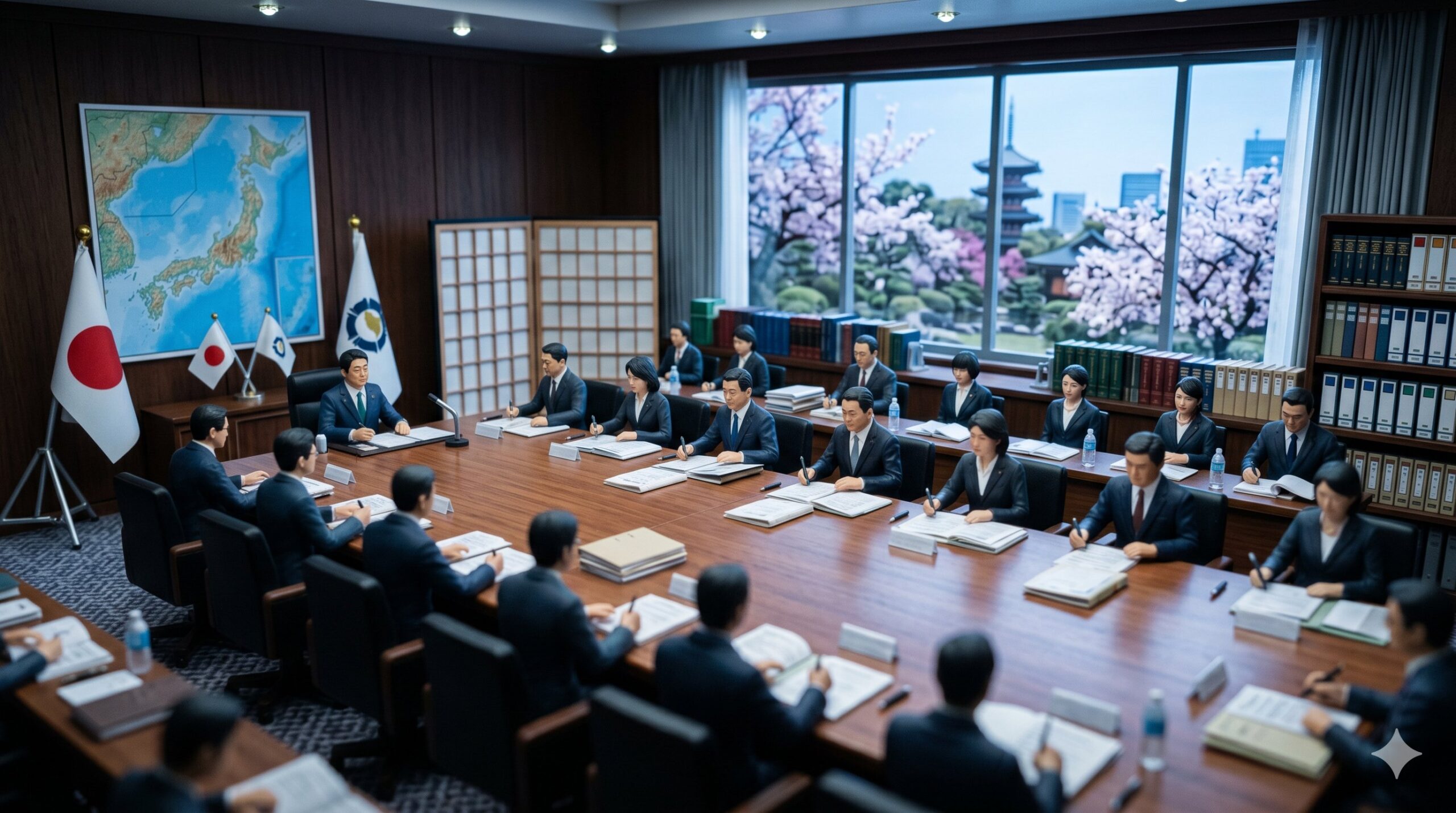
On April 2026, Japan’s post-war stance on weapons exports underwent a historic transformation. The “Three Principles on Arms Exports” established in 1967—which prohibited sales of lethal weapons—no longer holds absolute force. A new era begins in which Japan can, in principle, export deadly military systems. Nearly sixty years of commitment to a peaceful, non-militarized identity faces its most significant test since the postwar settlement.
The shift is unmistakable in practical terms. The previous “five categories” restriction (limiting exports to rescue, transport, surveillance, early warning, and minesweeping operations) has been abolished. Combat aircraft, missiles, and military vessels—systems explicitly designed to kill—are now permissible exports. Defense equipment has been reclassified into two categories: “weapons” (lethal systems) and “non-weapons” (radar, protective gear, etc.). While three principles remain—rigorous screening, third-party transfer controls, and a ban on sales to conflict parties—a crucial exception clause permits exports “when deemed necessary for national security.” The sale of military vessels to Australia is already approved, and a dozen more nations are expected to follow.
Prime Minister Takahashi’s explanation was straightforward. “In an age when no single nation can ensure its security alone, nations must support each other through defense capabilities. Japan must now do the same.” Behind this message lies an assessment of Japan’s precarious security environment, one shaped by rising powers, regional conflicts, and shifting global alignments. The pressures are real: a militarily ambitious China, an unpredictable North Korea, an unstable peninsula, and strategic partnerships that demand reciprocal commitment.
Yet domestic reaction has been sharply divided. On April 16, a massive protest erupted in Tokyo’s Shinjuku district. “Oppose the repeal of five-category restrictions.” “Stop weapons exports.” “Don’t turn Japan into a merchant of death.” Tens of thousands took to the streets, spanning generations and professions. Former prime ministers issued public statements of concern. Academia, civil society, and labor unions mobilized. Simultaneously, Australia, Southeast Asian nations, and European allies voiced approval. China’s Foreign Ministry spokesperson responded with sharp warnings: “We maintain vigilance against Japan’s reckless neo-militarism and will resolutely resist it.” The division cuts through Japanese society—no consensus exists. This is not a minor technocratic adjustment but a civilizational question.
This is far more than a policy adjustment. The “pacifism” that has defined postwar Japan is being fundamentally questioned. The BBC called the decision “a decisive break from post-WW2 pacifism.” Japanese defense white papers now carry explicit references to this shift, marking a departure from the postwar framework itself. What makes this moment historic is not merely the policy change, but the recognition across international media that Japan is shedding a core identity—one that distinguished it for nearly eighty years.
How did we arrive at this moment? Tracing Japan’s path regarding weapons exports reveals a complex trajectory of incremental steps and strategic pressures—a story not of sudden rupture but of gradual erosion of principle.
In 1967, Prime Minister Eisaku Sato established the “Three Principles on Arms Exports,” declaring that Japan would not sell weapons. The principles restricted sales to communist-aligned nations, conflict zones, and UN-sanctioned countries. Yet the interpretation hardened over time. By 1976, under Prime Minister Takeo Miki, it had become a de facto complete prohibition through the “Government Unified View on Arms Exports.” This decision was not arbitrary—it emerged from postwar consensus. Japan, having experienced militarism and defeat, chose an alternative path. The ban became central to Japan’s identity as a “peace nation,” transmitted across generations as a core value separating Japan from militarized powers. It was, in essence, a civilizational commitment.
For four decades thereafter, the principle remained unbroken. Through Cold War security debates and defense enhancement discussions, weapons export restrictions remained Japan’s red line. Opposition parties and civil society converged on a shared understanding: “Weapons exports do not align with Japan’s identity.” This consensus transcended left-right political divisions—it represented a foundational postwar commitment. Politicians across the spectrum accepted this constraint as non-negotiable. Public opinion remained stable. The peace constitution and the pacifist identity were intertwined.
The turning point arrived in 2014. Prime Minister Shinzo Abe introduced the “Three Principles on Defense Equipment Transfer,” permitting limited exceptions. A new concept—”defense equipment”—was introduced, allowing transfer to allied nations. The background was strategic: deepening Japan-U.S. defense cooperation and strategic partnerships with Australia and India. However, sales of “equipment with lethal capability” remained prohibited. At this point, Japan still upheld a fundamental principle: “We do not sell lethal weapons.” Abe’s move was controversial, but he accepted domestic constraints. It was a partial opening, but the essential boundary remained intact. Critics feared this was merely a wedge. Time would prove them prescient.
In 2023, another shift occurred. The Kishida administration authorized the export of lethal equipment for the first time, but limited it to “joint fighter development (GCAP).” It was a significant step, crossing the lethal weapons threshold for the first time. Yet the government framed it narrowly: just this one project, just this one exception. Domestic debate continued; the consensus held that this was an “exceptional measure,” not a fundamental transformation of principles. The government reassured critics: Japan remained committed to pacifism, just adapting to new realities.
Now, in 2026, the Takahashi cabinet has removed even that constraint. Incremental liberalization has culminated in something approaching full deregulation. The limit is no longer “exceptional” but rather a new baseline. The turning point has been reached—not a gradual evolution, but a decisive rupture. What supporters of the 2014 and 2023 moves argued would remain “limited exceptions” has become the new rule. The trajectory is now clear: principle gives way under pressure.
The logic of supporters is rooted in security realism. China’s rapid military expansion is undeniable. Public documents show China’s defense spending has increased fourfold over fifteen years. Military capabilities are advancing across air, sea, and missile domains. Russia’s invasion of Ukraine exposed the fragility of Western defense structures and the importance of allied unity. North Korean provocations threaten the Korean peninsula and test regional patience. “A single nation cannot defend itself alone”—this reality is felt acutely by every Japanese defense official. The strategic environment is objectively more dangerous than in 1967 or 1976. Strengthening defense equipment cooperation with allies is now a practical necessity. Formal requests from Australia, expectations from the United States, and appeals from Southeast Asian partners are woven into Japan’s defense strategy. From this perspective, clinging to outdated peace principles in a dangerous world is irresponsible.
There is also an economic dimension: preserving the defense industry. Developing fighter jets and missile systems demands enormous investment. The domestic market alone cannot sustain profitability. Japan’s defense budget stands at approximately five trillion yen, but comparable military spenders are limited. Permitting weapons exports could preserve industrial capacity and employment. Major defense manufacturers—Mitsubishi Heavy Industries, Kawasaki Heavy Industries, IHI—seek access to larger global markets to survive global competition. These are not merely commercial entities but custodians of Japan’s technological base. The erosion of these companies would represent a loss for Japan’s technological competitiveness. Supporters argue: “In a global security environment, pacifism alone cannot protect a nation. This is realism, not idealism, and Japan’s survival depends on it.” They point to other allied democracies that export weapons while maintaining democratic values.
There is also a deeper geopolitical dimension. Maintaining a “free and open” Indo-Pacific order requires Japan to be more than a passive participant—it demands active strategic partnership. Defense equipment exports represent that commitment. Deepening ties with Australia, India, and Southeast Asian democracies necessitates this step, supporters contend. Strategic credibility, they argue, cannot be costless; it demands meaningful contribution to alliance security. Without burden-sharing, alliances weaken. Japan must demonstrate commitment through concrete action, not merely diplomatic support. In this framing, pacifism is not merely defensive—it becomes a luxury that undermines broader security objectives.
But the opposition voices are equally serious and deeply rooted. They grieve the erosion of postwar “pacifism,” the foundational commitment of Japan’s democracy. Permitting weapons exports feels like a transformation into a “merchant of death,” a betrayal of historical memory and constitutional principle. At protest sites, the refrain was repeated: “This is a step toward war.” The language was passionate not because it was merely rhetorical, but because it reflected genuine fear. Pensioners remembered wartime devastation. Younger generations had been taught that Japan’s path was different. Civil society organizations mobilized to resist what they saw as civilizational betrayal. This was not performative opposition but genuine alarm rooted in national experience.
Critics also point to regional consequences with historical justification. China’s sharp reaction is symptomatic of how this decision will be interpreted. This decision risks deepening tensions among neighbors and accelerating arms competition beyond Japan’s control. The phrase “new-style militarism” in Beijing’s rhetoric signals that regional powers will interpret Japanese arms exports as provocative, potentially triggering countermeasures. Observers ask: “Does Japan’s entry into the global weapons market truly enhance regional stability, or does it trap the region in a security dilemma?” This question carries weight and historical precedent. Arms races often produce the opposite of security.
Critics further highlight an internal contradiction that undermines government assurances. The safeguards—screening processes, third-party controls, conflict-zone prohibitions—will they hold? The exception clause “when deemed necessary for national security” creates potential loopholes. These concerns rest on solid historical precedent: the 1967 principles were gutted by 2014’s “defense equipment” reframing; 2014’s restrictions were narrowed by 2023’s GCAP exception; now even that exception dissolves. This trajectory suggests that “principle” itself becomes negotiable under pressure. The pattern is clear: each compromise opens the door to the next. Can one truly trust that “exceptions” will remain exceptional? History suggests otherwise.
Critics further raise profound moral concerns that cannot be dismissed as mere sentiment. What becomes of Japanese responsibility for weapons exported abroad? If Japanese arms are deployed in conflict and civilians suffer, how does Japan respond to that accountability? These weapons will not remain in peace. They will be used. History shows this repeatedly. Japan will bear some moral responsibility for that use. This is not rhetorical but grounded in genuine ethical reflection about the nation’s role in potential suffering. How does Japan as a democracy justify its responsibility for deaths caused by weapons it exported?
Domestic opinion is unmistakably split along generational and ideological lines. While protests are substantial, support for defense strengthening is also significant. Younger demographics show higher approval for defense capabilities than older generations—they lack wartime memory but face tangible security threats. How one views this issue depends on age, geography, profession, and lived experience. Japan is fragmenting along these lines. The consensus that held for nearly eighty years has broken. Society is now genuinely divided on who Japan is and should be.
Defense industry voices express cautious optimism about economic prospects. Sales are projected to reach 12 or more nations; economic ripples will be substantial. Revenue projections span the multi-billion-dollar range. Defense exports could offset declining domestic demand. Yet greater overseas use of Japanese-made weapons brings accountability concerns that extend beyond economics. If Japanese arms are used in conflict and civilians are harmed, how will Japan respond? International law and reputational damage could become significant costs offsetting economic gains. Japan’s global reputation as a peaceful democracy could be permanently altered.
The government emphasizes the phrase “in principle permissible.” Not all weapons will be exported, only those passing strict review. Technically, such discrimination is feasible. But history teaches that the boundary between “principle” and “exception” erodes over time. What begins as “exceptional” becomes routine; what begins as “restricted” becomes normalized. Japan’s own postwar record demonstrates this pattern repeatedly.
China and Russia interpret this as evidence of Japanese “militarism.” Whether the facts support such interpretation is debatable; the geopolitical calculation underlying it is clearer. Japan’s transition to an arms-exporting nation is undeniably a break from the postwar model. Whether this constitutes a return to “militarism” or merely pragmatic statecraft requires more nuanced judgment. But perception is a strategic fact: regional powers will interpret Japanese weapons sales through this lens, and Japanese intentions will be questioned regardless of stated guardrails. Optics matter. Intent matters less than perception in geopolitics.
Japan faces a deeper, perhaps irresolvable contradiction: how to reconcile its identity as a “peace nation” with its role as a committed ally. U.S., Australian, and European expectations pull in one direction. Threats from China, Russia, and North Korea push in another. Between these pressures, Japan has accepted a new reality: becoming a weapons-exporting state. This accommodation satisfies neither pacifist ideals nor alliance imperatives completely. Japan will be perceived as having abandoned pacifism, yet defense strengthening alone may prove insufficient if regional competition accelerates. Japan may have lost its distinctive advantage—the moral authority of pacifism—without gaining the security benefits it seeks.
Two competing scenarios illuminate the stakes. In the first, weapons exports bolster regional stability. Allied nations in Australia and Southeast Asia strengthen their defenses; deterrence against Chinese expansionism grows credible. Defense industry employment is preserved; technological innovation accelerates. Japan’s international presence expands. Regional military balances stabilize around this new equilibrium. In this arc, the decision would be remembered as “pragmatic and responsible,” a necessary adaptation to a dangerous world. Japan’s sacrifice of pacifism produces genuine security gains.
The second scenario is one of escalation and regret. Japan’s entry into the global arms trade accelerates regional militarization beyond beneficial levels. China responds by increasing military investment; other regional powers follow suit. Neighboring nations grow more hostile; conflict risks rise rather than fall. Japanese weapons are used in conflict; civilians are killed. Japan’s postwar identity as a “peace nation” fades, replaced by the label “defense industry power.” International criticism deepens; regional trust erodes. Japan’s own security paradoxically worsens as arms competition accelerates unchecked. In this arc, the decision would be judged a “historical mistake”—a false step that weakened rather than strengthened the nation, surrendering moral authority without gaining security benefit.
Which scenario materializes depends on choices yet unmade and circumstances beyond Japan’s control. Will the government enforce rigorous oversight? Will recipient nations use these weapons responsibly? Will regional competition escalate or stabilize? Will the United States provide strategic cover or shift alliance priorities? These unknowns render prediction impossible. Only observation of actual behavior—not government promises—can determine the outcome.
But before such questions, a prior one demands urgent attention: Has Japanese democracy adequately deliberated this transformation? Protests have been vocal; editorial boards have written extensively; parliament has debated. But do these conversations match the gravity of the moment? Have we truly reckoned with what is being abandoned? A policy this momentous—one that reshapes national identity and civilizational commitment—requires more than standard legislative procedure. It demands genuine popular understanding and acceptance. The sharp division suggests that acceptance remains incomplete. Many Japanese citizens have not been invited to genuinely deliberate this fundamental choice.
Postwar Japanese pacifism was not merely an abstract principle but a historical commitment born from devastating experience. Nations that wage war suffer. Japan learned this through atomic bombs, fire bombing, and national defeat. That lesson produced pacifism—not weakness, but wisdom. Surrendering that vow under pressure from contemporary security threats—is this “realistic adaptation” or betrayal of fundamental principle? These are not rhetorical questions but genuine philosophical problems requiring honest engagement. Japan cannot evade this question indefinitely.
Japan will export weapons—that fact is now set and cannot be reversed. But whether society genuinely understands and accepts the meaning of that fact remains an open question worth pursuing. Decision does not automatically equal consent; law does not automatically equal wisdom. The moment of choice has passed. What remains is reckoning with its consequences.
Both supporters and critics are acting from sincere conviction grounded in competing visions. Both camps possess rational arguments. Both harbor internal contradictions. The issue resists reduction to “who is right.” Both sides contain truth. The tragedy is that Japan must choose between competing truths—between security and peace, between alliance commitment and civilizational identity, between present threats and historical memory.
What remains to be asked persistently is: What kind of nation is Japan becoming through this transformation? If weapons exports are permitted, what is being protected, and what is being sacrificed? Such answers cannot come from government announcements alone. They must emerge from society-wide dialogue and collective reckoning. The real work of democratic deliberation lies ahead, after the decision has been made.
Observable markers will reveal the truth of this decision over time. Watch which nations receive Japanese weapons and under what criteria. Monitor defense industry revenues and employment effects. Track regional arms patterns and military expenditures. Observe China’s response and regional stability indicators. Above all, observe how domestic political division evolves—whether society can sustain honest disagreement, or whether consensus demands silence. These empirical facts will eventually determine whether this decision was wise or tragic.
Nearly eighty years of postwar pacifism stand at a crossroads—though we are now at the crossroads, not approaching it. The choice has been made. What lies ahead is not yet written in its details. And the power to shape that future does not rest solely with government. It rests with the society’s capacity to question, to witness, and to hold its own choices accountable. That burden falls on all citizens—not to predetermined judgment, but to sustained moral attention and vigilance about the consequences of this historic shift.The implications of this historic decision will unfold gradually across years and decades. Japan’s export policy will continue evolving. Recipient nations will use Japanese weapons in ways Japan cannot fully anticipate or control. Regional dynamics will shift in ways both intended and unintended by Japanese policymakers. Most importantly, Japan’s understanding of itself—what it fundamentally means to be Japanese in the twenty-first century—will transform irreversibly. The Japan emerging from this pivotal moment will not be identical to the postwar nation that committed itself explicitly to peace principles. Whether that new Japan becomes more secure, more influential, or more respected remains profoundly uncertain and contested.
For now, Japan stands divided between two competing visions with no clear resolution in sight. One is the peace nation archetype: born from terrible suffering, committed to pacifism as moral principle, economic advantage, and strategic identity. The other is the security nation: acknowledging that genuine peace cannot be achieved through unilateral disarmament in a genuinely dangerous, multipolar world. Both visions contain authentic wisdom. Both harbor grave blindness. Choosing the security vision does not negate the peace vision—it merely displaces it from center to margin. Yet displacing such a foundational commitment, carried consistently for eight decades, carries costs that will only become fully visible over extended time.
この記事を書いた人
灰島
30代の日本人。国際情勢・地政学・経済を日常的に読み続けている。歴史の文脈から現代を読むアプローチで、世界のニュースを考察している。専門家ではないが、誠実に、感情も交えながら書く。


コメント