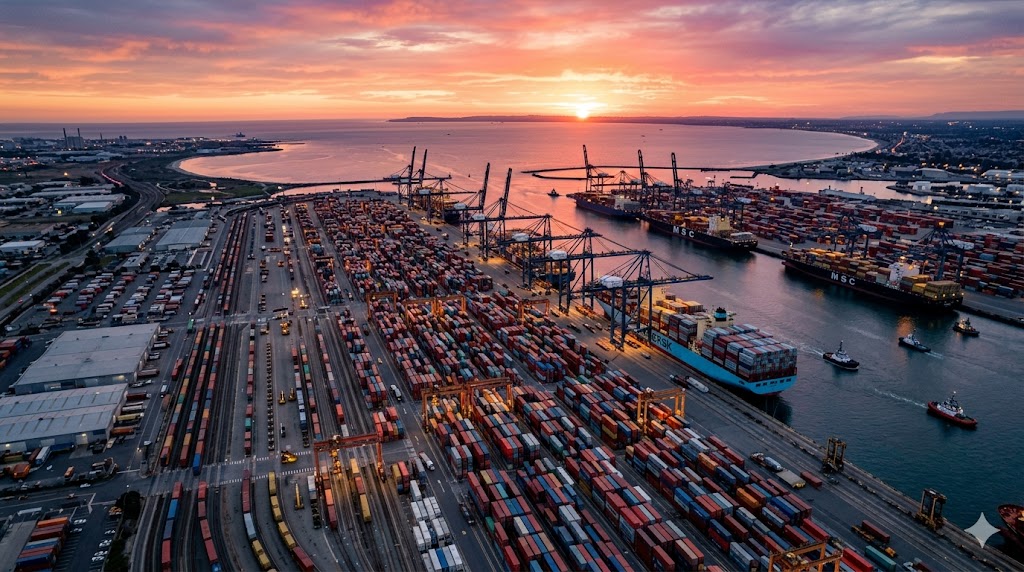
The week the world stopped waiting for WashingtonA year after the announcement of what the administration called Liberation Day, a striking pattern has emerged in international trade. Marketplace’s reporting captured it plainly: while America was putting up tariff walls, other countries were tearing theirs down, reaching new deals without the United States almost every day. The European Union finalized its agreement with the Latin American bloc Mercosur. It concluded what was described as the most significant trade deal in EU history with India. It signed an agreement with Australia. Together, these three agreements opened tariff-free market access for EU businesses to over two billion consumers, a number that dwarfs the American domestic market. The phrase trade without America has moved from theoretical concern to operational reality.
Three agreements, each more consequential than the lastLooking at the three deals individually clarifies the scale of what has occurred. The EU-Mercosur agreement, provisional application of which begins May 1, 2026, liberalizes ninety-one percent of Mercosur tariff lines over a period of up to fifteen years, with EU tariff lines being cleared on ninety-five percent of Mercosur exports over ten years. Analysis from Sullivan and Cromwell describes the implications vividly: Brazil, Argentina, Uruguay, and Paraguay, representing a combined market of over two hundred and sixty million people with substantial agricultural and manufacturing capacity, are now substantially more open to European goods and investment. The EU-India agreement goes further still. The European Commission characterized it as the largest deal ever concluded by either party, covering two economies representing close to one quarter of global GDP. Indian tariffs on ninety-seven percent of EU goods exports will eventually reach zero. The EU-Australia agreement, meanwhile, serves a dual purpose: commercial access to a high-income Pacific market and guaranteed access to critical raw materials including lithium, which has become central to Europe’s clean energy transition strategy.
The paradox that American tariffs createdThere is a historical irony here that deserves explicit acknowledgment. The stated purpose of American tariff policy was to protect domestic manufacturing and extract trade concessions from other countries. The actual consequence has been to accelerate the construction of a trading order that excludes the United States. Countries that faced heightened tariff risks from Washington concluded, reasonably, that dependence on American market access was a strategic liability. They responded by diversifying that dependence at a pace that would not have occurred without the external pressure. Tax Foundation data confirms the scale of American tariff revenue: approximately 224.8 billion dollars was collected between January 2025 and February 2026. These funds entered the federal treasury. But simultaneously, American importers paid those tariffs, passed the costs to consumers, and contributed to inflationary pressure in the domestic economy. The protection function, as economists have long predicted, operated less as a shield for American producers and more as a tax on American buyers.
What the effective tariff rate actually means for householdsPenn Wharton’s April 15 update documents the effective tariff rate at 8.9 percent overall, reaching 31.6 percent against Chinese imports. Steel and aluminum face a forty percent effective rate. Automobiles face 13.5 percent. Behind these percentages are concrete consequences for American businesses and households. A family purchasing a new automobile pays more than they would have under previous tariff regimes. A manufacturer sourcing intermediate goods faces higher input costs. A logistics company planning supply chains must calculate tariff exposure alongside traditional cost factors. The complexity created by these layered tariff structures has raised compliance costs across entire sectors, adding frictions that persist even when the policy rationale is contested.
Japan’s direct exposure to the tariff environmentFor Japan, the tariff landscape creates both burdens and opportunities that require careful navigation. On the burden side, Japan’s automotive exports to the United States face the 13.5 percent effective tariff that applies to the sector. Japanese automakers with North American production capacity are partially insulated, but those relying on exports from Japanese facilities feel the full impact. The same compression affects other Japanese manufactured goods. On the opportunity side, the new trading networks that the EU has opened to Mercosur and India represent markets where Japanese companies can compete on merit rather than facing tariff disadvantages. Japan maintains existing free trade frameworks including RCEP and the Japan-EU Economic Partnership Agreement. The strategic question is whether Japan’s government and corporate sector can mobilize these frameworks with sufficient energy to meaningfully reduce dependence on American market access.
The WTO and the absence of enforceable rulesUnderneath the specific deal-making lies a deeper structural problem that will shape international trade for years: the World Trade Organization’s dispute resolution system has been effectively paralyzed by Washington’s refusal to approve new Appellate Body members. Without a functioning appellate tribunal, WTO rules cannot be enforced against members who violate them. This institutional breakdown did not begin with the current administration. It began during Trump’s first term and was never repaired. The consequence is that the multilateral trading system, built over decades and embedded in thousands of binding commitments, now operates without an effective enforcement mechanism. The bilateral and regional agreements that the EU and others are constructing represent a partial substitute, but they are substitute structures rather than the universal system. The world of trade is fracturing into an archipelago of overlapping bilateral and regional arrangements, each with its own rules, its own dispute mechanisms, and its own membership. Navigating this archipelago is far more complex and costly than operating within a single universal framework.
The EU’s strategic clarity and Japan’s responseLooking at how the EU has responded to American tariff pressure illuminates a strategic clarity that is instructive. CNBC’s analysis of the EU-Australia deal noted that both parties are facing significant U.S. tariff exposure and deliberately chose each other as mutual hedges against American policy risk. This framing captures something important. These are not simply commercial agreements. They are strategic infrastructure investments against the possibility that American market access becomes unreliable. The EU’s willingness to absorb some competitive adjustments in its agricultural sector, to meet the political demands of Mercosur members, reflects an assessment that the long-term value of a stable southern hemisphere trading network exceeds the short-term cost of market opening. Japan’s government could benefit from adopting a comparable strategic clarity about which trading relationships are being treated as strategic infrastructure rather than merely commercial convenience.
China’s strategic position in the reorganizing trade mapChina’s position within this reshuffling trading order deserves careful examination, because it affects Japan directly. Chinese goods face the highest effective American tariff rates, at 31.6 percent, which provides a strong incentive for Chinese manufacturers to route exports through third countries. This phenomenon, known as trade deflection, has been documented across Southeast Asian manufacturing hubs, where Chinese components enter local supply chains before being exported to the United States under lower tariff classifications. Japan’s trading relationships with ASEAN countries, and Japan’s own exports to the United States, exist within this context. Japanese companies with production in Southeast Asia need to assess their exposure to potential American tariff action targeting these deflection routes. The strategic uncertainty created by unpredictable enforcement is itself a cost that weighs on investment decisions throughout the region.
Supply chain restructuring and its timelineOne of the underappreciated realities of the tariff environment is that supply chain restructuring is a slow and capital-intensive process. Companies cannot instantly substitute one supplier for another when decades of industrial relationships, tooling investments, logistics networks, and quality certification processes are embedded in existing arrangements. The rush to diversify supply chains away from China, which accelerated after 2018 and continued under subsequent administrations, has achieved genuine results. But the process is far from complete, and new tariff pressures continue to disrupt partially restructured systems before they can stabilize. Japan’s manufacturing sector, deeply integrated with Chinese supply chains for components and materials, faces this challenge acutely. The timeline for meaningful diversification is measured in years and decades, not months. Tariff policy that assumes otherwise forces short-term disruptions that generate costs without delivering the promised supply security.
A possible constructive outcomeNot every consequence of the current trade environment is necessarily negative in the long run. The acceleration of non-American trade agreements may ultimately produce a more genuinely multipolar trading system, where no single country’s market access decisions can hold the entire global economy hostage. If the EU-Mercosur-India-Australia network develops depth and liquidity over time, and if Japan and other Asian economies connect effectively to this network, the collective result could be a more resilient global trading architecture. Dependence on any single market creates vulnerability. The diversification of dependencies, though disruptive in the transition, may reduce systemic fragility. Japan’s historical experience with oil supply diversification after the 1970s shocks offers a precedent: the pain of adaptation produced genuine long-term resilience.
The more likely scenario: persistent fragmentationThe more plausible near-term trajectory, however, is continued fragmentation. The three major regional blocs, centered on the dollar, the euro, and the renminbi, are developing increasingly self-referential trade and financial systems. Supply chains are being shortened and regionalized. Investment flows are being guided by security considerations as much as commercial logic. Each of these trends raises the cost of cross-bloc transactions and reduces the efficiency gains that integrated global markets have historically provided. For Japan, which has built much of its postwar prosperity on participation in an integrated global trading system, this fragmentation trend poses a genuine structural challenge. Japan’s economy is not large enough to sustain itself primarily through domestic demand. Export access to multiple markets is not a luxury but a necessity. If the world continues fracturing into competing blocs, Japan needs to be strategically positioned to operate across those blocs rather than being confined to any single one.
The question Japan cannot deferThe trade realignment underway raises a question that Japanese policymakers cannot indefinitely defer: does Japan’s trade strategy treat its relationship with the United States as foundational and other relationships as supplementary, or does it actively build the multipolar trade portfolio that the current environment demands? The answer matters not just commercially but geopolitically. A Japan that is deeply enmeshed in the EU trade network, in the ASEAN supply chain ecosystem, in the Indo-Pacific infrastructure investment framework, is a Japan with significantly greater strategic flexibility than one that depends primarily on a single bilateral relationship. Whether the political will and institutional capacity exist to make that shift at the necessary speed, and what the transition costs will be for Japanese companies and workers in the interim, are questions that deserve more urgent and honest attention than they are currently receiving.
China’s supply chain repositioning and global manufacturing shiftsThe highest effective tariff rates fall on Chinese goods, creating powerful incentives for Chinese manufacturers to relocate production to third countries from which exports face lower tariff exposure. Vietnam, Indonesia, Mexico, and India have all attracted significant Chinese manufacturing investment, partly driven by this dynamic. American trade enforcement agencies are aware of this circumvention mechanism and have been tightening rules of origin requirements and supply chain transparency demands to reduce its effectiveness. Japanese manufacturers operating in Southeast Asia face related challenges: when goods produced at ASEAN facilities are exported to the United States, the degree to which those goods incorporate Japanese, local, or Chinese content matters for tariff classification purposes. The administrative complexity and legal uncertainty created by these overlapping supply chain and tariff questions represents a cost in itself, entirely separate from the tariff rates actually paid.
Japan’s post-TPP multilateral strategyOne underappreciated element of Japan’s trade position is that it has pursued ambitious multilateral trade strategies precisely because American leadership in multilateral trade liberalization became unreliable. After the United States withdrew from the Trans-Pacific Partnership, Japan chose to advance the remaining members toward the Comprehensive and Progressive Agreement for Trans-Pacific Partnership rather than abandoning the framework entirely. This was a significant diplomatic investment that has paid dividends: CPTPP provides Japan with preferential access to markets in Canada, Australia, New Zealand, Singapore, Malaysia, and several other economies. The Japan-EU Economic Partnership Agreement substantially improved access to the European single market. RCEP established common rules with China, Korea, and the ASEAN bloc. These frameworks provide concrete alternative channels if American market access becomes more constrained. However, the existence of trade agreements and their actual utilization are different things. Japanese companies that have built their export strategies around the American market face genuine adjustment costs in reorienting toward these alternative frameworks, even where the legal structures for doing so are in place.
How American tariffs travel through global inflationThe impact of American tariff policy on Japan extends beyond direct effects on Japanese exports. When American tariffs raise the domestic price level in the United States, they reduce real purchasing power for American consumers, which in turn reduces demand for imported goods including Japanese products. The International Monetary Fund’s April 2026 World Economic Outlook projected that current tariff levels would reduce global GDP growth by measurable amounts relative to baseline. Japan, as a highly trade-dependent economy, absorbs a share of this global growth reduction. Additionally, when Chinese manufacturers facing high American tariffs redirect their output toward other markets, they can depress prices in markets where Japanese producers compete. The relationship between American tariff policy and Japanese economic outcomes is thus multi-directional and operates through channels that are not always visible in bilateral trade statistics.
The long-term question of rule formationThe most significant long-term consequence of the current trade fragmentation is the question of whose rules govern global commerce when the WTO’s universalist framework is no longer operative. The bilateral and regional agreements that the EU has concluded with Mercosur, India, and Australia each carry their own rules on intellectual property, labor standards, environmental protections, digital trade, and dispute resolution. Where these rules align with each other, they create convergent norms that could eventually form the basis for renewed multilateral arrangements. Where they conflict, they create compliance complexity for multinational businesses and potential frictions between trading partners. Japan has a significant interest in how this rule formation process evolves, because Japan’s global trading position depends on operating across multiple markets with different regulatory frameworks. Japan’s active participation in shaping the content of regional trade rules, through CPTPP governance, through Japan-EU EPA joint bodies, and through engagement in broader WTO reform discussions, is an exercise of genuine influence over the trading environment Japan’s businesses will operate in for decades.
The map is being drawn right nowThe drama of specific policy announcements and diplomatic confrontations tends to dominate coverage of international trade. But beneath that drama, quieter and more durable changes are accumulating. European goods are beginning to flow into Latin American markets under the Mercosur agreement. Indian tariff schedules are being rewritten to accommodate European exports. Australian lithium is being sourced by European battery manufacturers under contractual frameworks that will structure the relationship for years. These specific commercial transactions, aggregated across thousands of firms and millions of shipping containers, constitute the actual drawing of the new trade map. Japan’s position on that map is being determined not only by government policy choices but by the hundreds of individual corporate decisions about where to invest, where to source, and where to sell. The companies and government agencies making those decisions now, in the immediate aftermath of the tariff shock, are making choices that will be very difficult to reverse later. Whether those choices are informed by a clear-eyed understanding of the structural transformation underway, or whether they are reactive to immediate price signals, will determine much about Japan’s economic position in the decade ahead.
The RCEP factor and Japan’s position between blocsJapan’s membership in the Regional Comprehensive Economic Partnership, alongside China, South Korea, and the ASEAN bloc, gives Japan a distinctive position in the reorganizing global trade architecture. RCEP represents the largest trade agreement in the world by coverage of GDP. For Japan, RCEP’s significance is partly that it provides a framework in which Japan, China, and South Korea have agreed to common trade rules. If US-China trade competition intensifies to the point where companies face explicit pressure to choose one supply chain or the other, Japan’s RCEP membership provides at least a framework for maintaining commercial relationships across the divide.
Digital trade as the next dimension of the same contestThe current focus on goods trade and tariffs obscures a parallel competition over the rules for digital trade that will become increasingly important as economic value shifts further toward digital services and data flows. The United States, European Union, and China hold different positions on data governance, platform regulation, privacy standards, and the conditions under which digital services companies can operate across borders. These differences are creating de facto digital trade barriers even without formal tariff mechanisms. Japan’s preference for multilateral digital trade rules reflects both genuine values and a strategic interest in preventing digital commerce from fracturing along the same geopolitical lines that goods trade is fracturing along now. Whether Japan can advocate effectively for this preference in a world where the major digital powers are setting unilateral rules is a question that will shape the practical environment for Japanese technology companies over the next decade.
Managing the transition in real timeUltimately, what matters most for Japan’s economic position is not the analytical clarity of any particular trade strategy but the capacity of Japanese businesses, supported by appropriate policy frameworks, to navigate multiple simultaneously changing markets, rules, and relationships. The companies that are making supply chain and market entry decisions right now, in the immediate aftermath of the tariff shock, are determining Japan’s actual trade position in ways that policy papers cannot. Understanding what those companies need, whether it is regulatory clarity, diplomatic support, financing instruments, or labor market flexibility, and providing it effectively is the most concrete form that a Japanese trade strategy response can take. The structural analysis of the new trade geography provides context. The specific business decisions made in specific industries over the next eighteen months will determine the actual outcome.
The moment that is being written right nowThe trade map being drawn in the current moment will be difficult to redraw later. Commercial relationships, supply chain investments, and institutional frameworks all develop inertia once established. The European companies that begin sourcing from Mercosur producers under the new agreement will build relationships, quality certifications, and logistics networks that persist beyond any single tariff cycle. The Indian manufacturers that gain European market access will develop the product standards and distribution networks that serve them across future regulatory changes. Japan’s opportunity, which is also Japan’s challenge, is to ensure that its own companies and policymakers are actively positioning within the new geography rather than simply reacting to it. The next five years will determine more about Japan’s trade position than the subsequent two decades will, because the choices being made now will compound forward.
この記事を書いた人
灰島
30代の日本人。国際情勢・地政学・経済を日常的に読み続けている。歴史の文脈から現代を読むアプローチで、世界のニュースを考察している。専門家ではないが、誠実に、感情も交えながら書く。


コメント