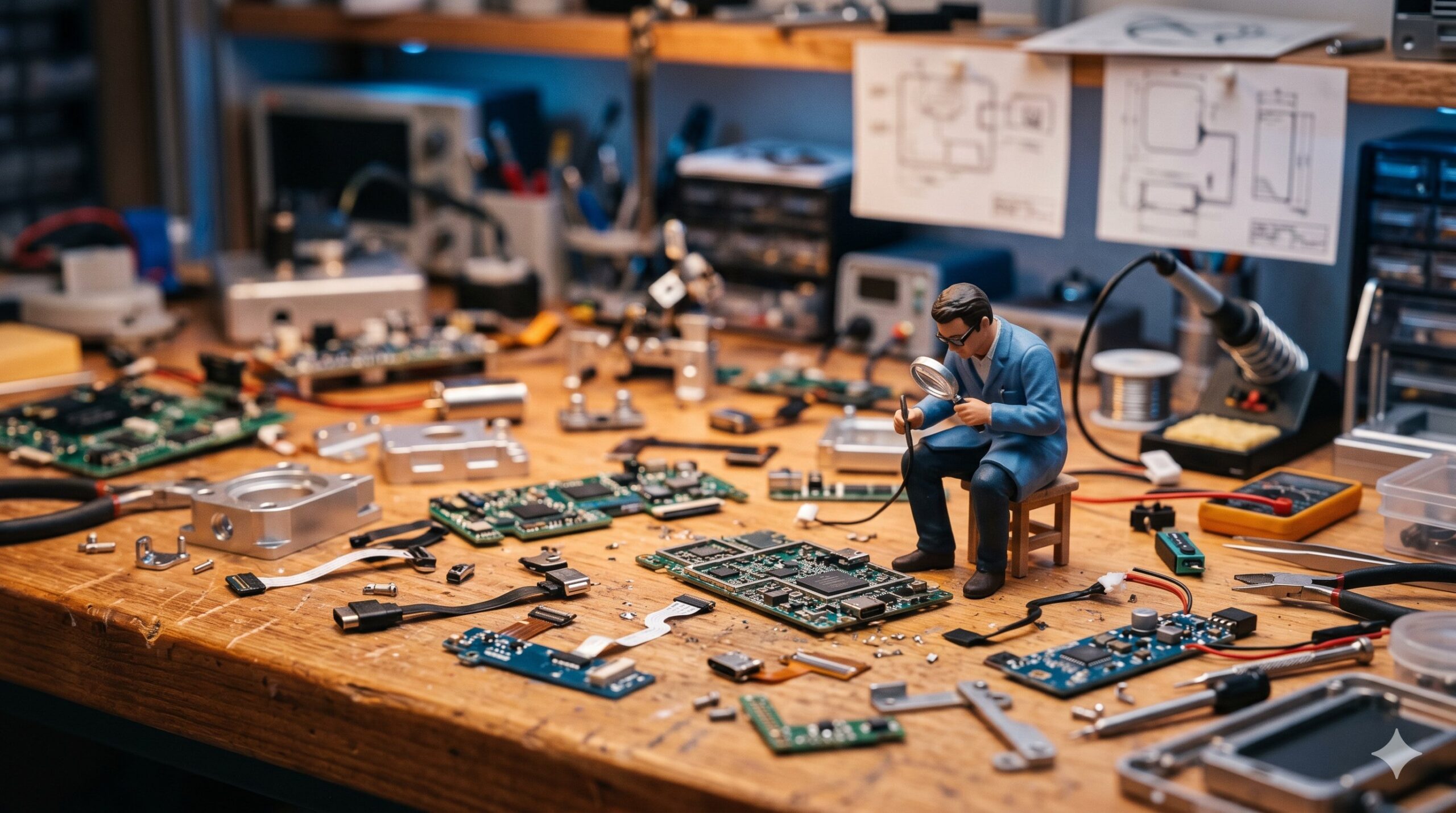
On April 20, Apple announced that Tim Cook would step down as CEO, becoming Executive Chairman instead, while John Ternus, Senior Vice President of Hardware Engineering, would assume the role effective September 1. Cook is 62; Ternus is 50. After 25 years in the top position, Apple’s leadership shifts from a supply chain and operations expert to a product engineer—a transition that carries weight far beyond the numbers.
The true significance of this move lies beneath the surface headlines. During his 15 years as CEO, Cook devoted himself to one overarching mission: scattering Apple’s supply chain across the globe—decoupling from China, distributing manufacturing to India, Vietnam, Japan, and a dozen other nations. It was unglamorous work, rarely covered, barely understood by investors. Yet that foundation is precisely what holds modern Apple together. As Cook steps aside, the question becomes: what is Apple choosing to prioritize next?
Ternus’s biography tells a revealing story. Since joining Apple in 2001, he has spent 25 years inside the hardware, designing the internals of Apple Cinema Display, AirPods, Mac, iPad, Apple Watch, and Vision Pro. His mind holds the microdetails—circuit layouts, component placement, manufacturing constraints—of nearly every product Apple has released. In other words, the person stepping into the CEO role understands more intimately than anyone alive how Apple builds what it builds.
The implication is straightforward: if Cook’s era was about “how do we manufacture existing products more efficiently and safely,” Ternus’s era signals a return to “what should we build next?” In an age of AI hype and iPhone maturity, Apple faces a pressing question about what comes after the smartphone. A product engineer is being handed the keys to answer that question.
Yet from a supply chain lens, a complication emerges. Cook spent 15 years weaving together a labyrinthine manufacturing network. No CEO can simply unwind it. Rather, Ternus will inherit it as a given—and his job will be to navigate that complexity while designing the next generation of products. Because Ternus is a hardware engineer, he understands that complexity in his bones. He holds both the map and the constraints simultaneously.
Evaluating Tim Cook’s legacy fairly requires precision. When Cook assumed the CEO role in 2011, Apple remained intoxicated by iPhone success. Yet simultaneously, Apple faced critical vulnerabilities in manufacturing and supply chain resilience. Dependence on China had become abnormally concentrated. Geopolitical risk climbed daily. Cook invested 15 years addressing this challenge. iPhone revenue grew from approximately $145 billion in 2011 to roughly $235 billion in 2024—while simultaneously dispersing manufacturing. India’s share of iPhone production rose from 0.3% in 2014 to 25% in 2025. Vietnam followed a parallel acceleration. Concurrently, Apple maintained relationships with Japanese suppliers. Cook thus became a rare executive who balanced two seemingly opposed mandates: “growth” and “risk diversification.” His achievement is sometimes called “Cook’s miracle” within the industry.
Yet from a supply chain lens, a deeper complication emerges. Cook constructed an extraordinarily complex manufacturing ecosystem across multiple nations, each with distinct labor costs, regulatory environments, geopolitical alignments, and technical capabilities. This intricate web cannot be unwoven by a successor CEO. Rather, Ternus faces the challenge of operating within this inherited complexity while simultaneously pushing toward next-generation product innovation. Because Ternus understands hardware engineering intimately, he grasps the constraints. That dual comprehension—mastery of product design coupled with inherited complexity of global manufacturing—defines his singular challenge.
Consider Japan’s role in Apple’s ecosystem. Apple’s investment in Japanese suppliers exceeds 100 billion dollars, with Sony standing as the largest supplier. Sony supplies nearly all iPhone camera sensors. Murata Manufacturing holds 30-40% of the global market for multilayer ceramic capacitors (MLCCs)—components invisible to consumers but essential to function. TDK supplies inductor coils and newly developed TMR sensors. Kyocera supplies optical components. Sankyo supplies lens barrels. These represent only a portion of the 1,282 Japanese-made components inside each iPhone. Japan’s manufacturing culture—characterized by artisanal commitment to precision and obsessive improvement—forms the hidden foundation of Apple’s product quality.
Here lies a truth rarely spoken: the faces behind these components remain invisible. The sensor design teams at Sony, the capacitor engineers at Murata, the precision-manufacturing crews at TDK—their names are unknown, their labor compressed into the abstraction “parts.” Yet their invisible effort, accumulated over years and decades, manifests as the completeness and reliability of an iPhone. That gap—between the extraordinary engineering behind the scenes and the consumer’s simple interaction with the device—defines Japanese manufacturing culture.
Apple Intelligence and on-device engineering: this emerges as the thematic horizon Ternus likely envisions for the coming era. Apple launched “Apple Intelligence” in 2024—generative AI running on-device rather than cloud-based. That choice emphasizes processor performance, chip-internal memory architecture, power efficiency. These exact competencies define Ternus’s core expertise. The next-generation Apple demands not merely manufacturing capacity, but hardware design calibrated to the AI era. Only an engineer’s perspective can deliver that. Japan’s suppliers have preserved world-class excellence in these domains. Therefore, Ternus’s tenure carries potential for Japanese suppliers to experience renewed importance and deeper technical collaboration.
Johny Srouji’s appointment is equally symbolic. Taking over hardware engineering from Ternus, Srouji specializes in “integrated chip design” spanning both design and manufacturing. Apple has invested heavily in proprietary chips (A-series, M-series), their internal architecture being among the world’s most complex. Srouji was at the forefront of that architecture development. This suggests Apple is steering manufacturing strategy toward even more technical leadership. The move hints at rebalancing—away from cost competition in India and Vietnam, toward deep technical cooperation with Japan and other advanced manufacturing hubs.
Japan’s smartphone market dominance and device ecosystem. Apple’s smartphone share in Japan reaches approximately 50 percent, far exceeding the global average of 27 percent. Japan represents one of Apple’s most profitable markets. Similarly, Mac and iPad share in Japan exceed global averages. Ternus, as a hardware engineer, certainly grasps Japan’s market significance. Japanese users possess deep technical understanding and impose demanding quality standards. The question Ternus faces is how to reflect those voices in next-generation design, and whether that feedback loop will influence Apple’s global strategy.
The supply chain transformation under Ternus may differ fundamentally from Cook’s approach. Cook sought resilience through geographic diversification and cost optimization. Ternus, as an engineer, may seek resilience through technical depth and partnership quality. This subtle but profound shift could elevate Japanese suppliers from transactional vendors to strategic partners in technological development. The lines between supplier and co-designer may blur.
Ternus’s elevation to CEO may alter the Japan dynamic. As an engineer, he recognizes something a supply chain manager might overlook: the irreplaceable value of “the best part.” Rather than viewing components through a transactional lens—”which supplier costs least?”—he views them through a design lens: “which supplier’s work is inseparable from this product’s identity?” During his tenure as SVP, Ternus led development of products like AirPods and Apple Watch, initiatives requiring the highest caliber of hardware engineering collaboration. That background likely carries with it a deep conviction: lasting partnerships with world-class engineering partners outweigh short-term cost reduction.
The next phase of supply chain diversification. Cook’s era emphasized geopolitical risk management—dispersing manufacturing to India, Vietnam, Mexico, and elsewhere to reduce China concentration. The next phase will likely emphasize technical excellence. Supporting Apple Intelligence and next-generation functionality requires more than manufacturing capacity—it demands advanced component design, cutting-edge processes, yield management. Japan’s suppliers stand at world-best levels across these domains. Paradoxically, Ternus’s tenure may see Japanese supplier strategic importance rise once again, not as cost leaders but as technology leaders.
The lineage: Jobs era, Cook era, Ternus era. Steve Jobs articulated product vision. Tim Cook translated that vision into global manufacturing and distribution. Ternus will inherit both legacies while reshaping vision for the coming age. On-device AI, privacy, ecology—each may be redefined through a hardware engineer’s lens. The emphasis may shift from “how do we make it?” to “what does the world need us to make?”
For Japanese suppliers, the question crystallizes into one timeless inquiry: How do we remain indispensable? During Cook’s era, Japanese companies held their ground by maintaining “world-class engineering standards.” Does that standard shift under Ternus? How does an engineer-CEO perceive Japanese engineers—as partners in a shared mission of technical excellence, or as vendors optimizing for cost? The answer to that question will likely determine the shape of Apple’s supply network for the next decade. Whether September 1’s CEO transition becomes merely a personnel change or signals strategic transformation, we cannot yet discern. That clarity remains ahead of us.
The timing of Ternus’s promotion coincides with Apple’s own inflection point. iPhone maturity has forced Apple to articulate a post-iPhone future. Services revenues grow, but they lack the aspirational power of hardware. Apple Intelligence offers a bridge—new hardware capabilities that enable new service experiences. The bet is that AI will revitalize consumer appetite for new devices. Ternus, as hardware architect, is being asked to lead that bet. The pressure is extraordinary.
Consider the organizational implications of engineer leadership. Cook surrounded himself with operations executives. His CFO (Luca Maestri) came from IBM. His Retail Chief came from Gap. His Supply Chain VP came from Compaq. These executives spoke the language of optimization and execution. Ternus, by contrast, will likely elevate engineers into more prominent strategic roles. Product roadmap decisions may shift from market-driven to technology-driven. This cultural shift, if it occurs, will reshape Apple’s entire decision-making architecture.
Japanese supplier relationships benefit from this shift. Under Cook, suppliers were optimized—evaluated on cost, reliability, compliance. Under Ternus, suppliers may be elevated to “innovation partners.” This shift unlocks collaborative relationships. Japanese suppliers, accustomed to long-term partnerships and continuous improvement culture, thrive in such relationships. Western suppliers, optimized for cost competition, may struggle with the new paradigm.
The vision for next-generation manufacturing will likely emphasize resiliency over cost. Cook’s era optimized for “cost per unit manufactured globally.” Ternus’s era may optimize for “speed to market, technical capability, geopolitical safety.” This shift elevates the value of nearby manufacturing partners and technically advanced partners over distant cost leaders. Japan benefits from both criteria—it is advanced, safe, nearby (relative to China), and capable of cutting-edge manufacturing.
The question of whether Ternus can match Cook’s operational mastery remains open. Cook is legendary for supply chain optimization, cost management, and execution discipline. Ternus excels at product innovation and technical problem-solving. These are different skill sets. Will Ternus develop Cook’s operational acumen? Or will Apple eventually appoint an operations expert to complement Ternus’s strategic vision? That structural question may take years to resolve.
Vision Pro represents the test case for Ternus’s leadership philosophy. The device pushed manufacturing and supply chain to their limits. If Vision Pro eventually achieves meaningful market adoption—becoming more than a luxury product—it validates Ternus’s belief that engineering-led innovation drives commercial success. If Vision Pro remains niche, it suggests that Cook’s operational excellence remains critical for market scale.
The relationship with Japan will ultimately depend on whether Japan’s suppliers can evolve. Ternus wants innovation partners, not vendors. Can Japanese suppliers embrace that role? Can they move from purely manufacturing focus to technical co-development? Some companies—like Sony and Murata—have the sophistication. Others may struggle with the transition. The next phase will reveal which Japanese suppliers can evolve quickly enough.
Tim Cook’s 15-year legacy requires detailed accounting. Apple’s revenue grew from $65 billion in 2011 to roughly $391 billion in 2024—a six-fold increase. Market capitalization expanded from $375 billion to $3.2 trillion—an 8.5-fold expansion. Yet these top-line numbers obscure Cook’s core achievement: supply chain multiplication. When Cook assumed leadership, iPhone production concentrated in three to four Chinese facilities, with minimal redundancy. By 2025, iPhone production spanned India (25%), Vietnam (18%), China (48%), and emerging locations (9%). This geographic distribution didn’t reduce costs—in fact, it increased them slightly. But it transformed Apple’s resilience. During the 2020 COVID pandemic, when China locked down, India and Vietnam production continued. During 2024 US-China trade tensions, Vietnam and India buffers protected supply. That resilience—not cost efficiency—was Cook’s true metric of success.
John Ternus’s specific product achievements demand recognition. When Ternus led the AirPods engineering team, the prevailing wisdom said wireless earbuds lacked sufficient battery life and connection stability. Ternus’s team solved those challenges through custom chip design, power management innovation, and new wireless protocols. AirPods became a $15+ billion revenue category. When he led Apple Watch redesign efforts, skeptics argued smartwatches remained “wrist curiosities.” Ternus oversaw the thermal design, battery optimization, and sensor integration that made Apple Watch viable. Today, Apple Watch represents a $15+ billion category. With Vision Pro, his team tackled one of hardware’s hardest problems: designing a wearable computing platform that doesn’t cause motion sickness, doesn’t overheat, and maintains all-day power. Vision Pro may not achieve mainstream success—that question remains open. But the engineering solution was a genuine feat. Ternus’s record is not “every product succeeded commercially.” Rather, “every product Ternus touched represented legitimate innovation in hardware design.”
Johny Srouji’s appointment as Chief Hardware Officer signals architectural shift. Srouji previously led Apple’s silicon design efforts. Apple’s custom chips (A-series for iPhones, M-series for Macs) now represent the company’s most defensible competitive advantage. Intel, Qualcomm, and MediaTek design chips for multiple customers. Apple designs chips exclusively for Apple products, optimizing for specific use cases—camera processing, neural processing, graphics. This specialization yields performance advantages rivals cannot match. Srouji’s elevation to chief hardware officer (a role Ternus previously held) means chip design authority is expanding into overarching hardware strategy. This suggests Apple’s next-generation products will be even more tightly integrated: custom silicon deeply intertwined with custom sensors, custom power systems, custom mechanical designs. Japan’s suppliers will increasingly need to provide components that integrate seamlessly with Apple’s proprietary chips.
India/Vietnam manufacturing shift carries profound strategic implications. Conventional wisdom attributes this shift to labor arbitrage—India and Vietnam’s lower wages reduce manufacturing costs. Reality is more complex. India’s government under Modi offers incentives for high-tech manufacturing. Vietnam’s trade relationships, while complex, position it favorably relative to China for US-facing companies. More fundamentally, manufacturing in India and Vietnam reduces geopolitical risk. If US-China relations deteriorate further—a real possibility—Chinese manufacturing becomes politically untenable. By diversifying to India and Vietnam before crisis hits, Apple avoids forced disruption. This is not cost optimization; it is risk management. A manufacturer willing to pay slightly higher unit costs for geopolitical diversification is making a strategic bet on future stability.
Japanese supplier ecosystem faces opportunity and threat simultaneously. Sony, Murata, TDK, and others benefited from Cook’s supply chain multiplication strategy. As Apple expanded production, Japanese suppliers provided specialized components to all manufacturing hubs. But Ternus’s era may see that dynamic shift. If Apple emphasizes custom integration and proprietary design, suppliers like Sony and Murata will need to develop deeper design partnerships—providing not just components but design collaboration on how components integrate with Apple’s custom silicon. Companies capable of that co-design partnership will thrive. Companies positioned as transactional vendors will face margin pressure and volume risk.
The Jobs-Cook-Ternus generational transition carries profound symbolism. Steve Jobs represented product vision untethered from manufacturing reality. His designs often seemed impossible until engineers made them possible. Tim Cook inherited those designs and solved the supply chain puzzle that enabled them at scale. Cook’s genius was logistical: how to manufacture 100 million iPhones annually across continents without supply interruptions. John Ternus now inherits both Cook’s distribution network and Jobs’s requirement to innovate. The challenge before Ternus is integration: how to use Apple’s global manufacturing system not as a constraint but as a competitive asset. This requires different thinking than Jobs or Cook. Neither visionary design nor logistical excellence alone suffices. What’s needed is hardware innovation that leverages global supply chain as an advantage. This is essentially new territory.
Apple Intelligence represents the strategic horizon for Ternus’s tenure. Apple announced “Apple Intelligence” in 2024—large language models running on-device rather than cloud-based. This choice emphasizes privacy and latency. But it imposes hardware constraints. Every iPhone, every Mac, every iPad must possess sufficient neural processing power to run AI models locally. This demands next-generation chips with larger neural processing units, specialized memory architectures, and more efficient power consumption. Iteratively improving existing chip designs is incremental. Supporting on-device AI at scale requires architectural innovation. Ternus has shown capability in this domain. His challenge is sustaining that capability while managing Apple’s global supply network. This integration of design innovation with operational excellence is where Ternus’s tenure will be tested.
The post-iPhone era requires honest reckoning with market realities. iPhone sales have plateaued. Installed base is 2+ billion devices. Upgrade cycles stretch to 4-5 years. Mature markets show no growth; emerging markets show modest growth. Apple’s growth story for the next decade cannot rest on smartphone sales. Services (software subscriptions, Apple TV+, Apple Music) provide recurring revenue but lack aspirational power. Hardware innovation is the only vector capable of inspiring generational upgrade cycles. Apple Watch, AirPods, Vision Pro—these represent attempts to create new categories. But none has achieved iPhone’s scale or margin profile. Ternus’s fundamental challenge is leading Apple toward the next iPhone-magnitude category. Whether such a category exists remains uncertain.
Comparison with the Jobs-to-Cook transition illuminates Ternus’s hurdles. When Cook assumed the CEO role in 2011, the iPhone was a proven success generating $20+ billion in annual revenue. Cook’s job was to scale what Jobs had proven. Every major strategic decision—supply chain diversification, cost reduction, international expansion—built on existing iPhone dominance. Ternus inherits a different situation. The iPhone remains large, but its growth era has ended. Ternus cannot simply optimize the past. He must imagine the future. This is inherently uncertain. A supply chain genius like Cook could ensure 5-10% annual gross profit growth simply through operational excellence. A design genius like Jobs could ensure products that users felt compelled to adopt. Ternus must somehow be both while also leading a different phase of the company.
Stock market reaction to CEO transitions signals investor confidence or doubt. Apple’s stock price in the 48 hours after Ternus’s announcement moved modestly—suggesting markets see this as a managed transition of an experienced insider rather than a risky leap to an unknown outsider. This is reassuring for Apple shareholders. It suggests continuity. But continuity alone cannot drive future growth. If investors believe Ternus is merely executing Cook’s playbook, Apple’s stock will underperform. If investors believe Ternus will launch genuinely innovative hardware categories, Apple will outperform. The next 12-24 months will reveal which narrative markets believe.
One fact, however, is certain. In Murata’s development labs, in Sony’s imaging sensor divisions, in TDK’s engineering centers, unnamed technicians continue their work—designing components with precision, iterating toward incremental excellence that consumers never consciously perceive. The cumulative force of their effort is what makes any corporate strategy meaningful. Because Ternus is himself an engineer, he may understand this truth in a way others do not—that no CEO’s vision matters without the invisible craftsmanship of the people who build it. Whether that understanding shapes Apple’s next chapter remains to be seen. For now, we can only watch, and wait for what becomes visible.
この記事を書いた人
灰島
30代の日本人。国際情勢・地政学・経済を日常的に読み続けている。歴史の文脈から現代を読むアプローチで、世界のニュースを考察している。専門家ではないが、誠実に、感情も交えながら書く。


コメント