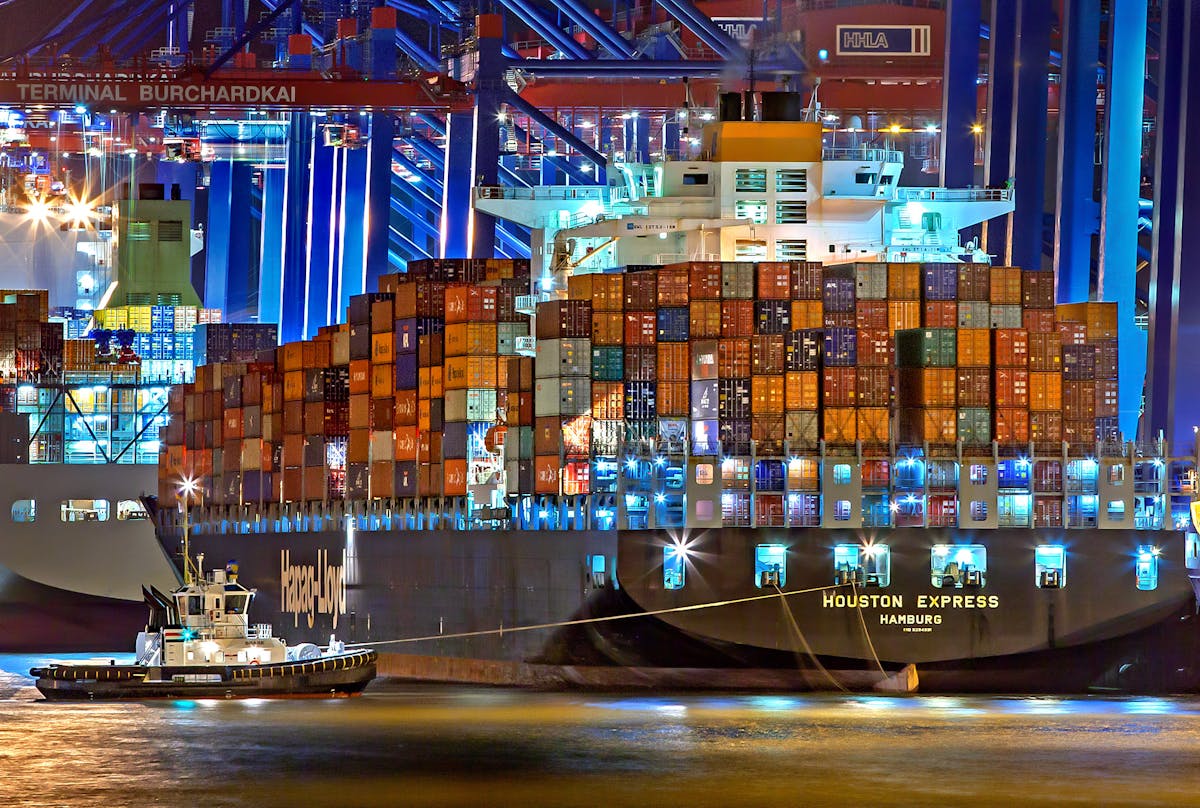
The Strait of Hormuz reopened on April 8, 2026, after 39 days of closure. The United States and Iran reached a two-week ceasefire agreement, with Pakistan serving as the critical mediator and making the announcement from Islamabad. CBS News reported that the agreement came just hours after President Trump threatened the complete annihilation of Iranian civilization if terms were not met. Global oil prices collapsed and equity markets surged worldwide. But I cannot share in the uncomplicated relief that many feel today. This is a two-week pause, not a peace settlement, and every fundamental cause of the conflict remains entirely unresolved.
Understanding what the 39-day war actually achieved requires stepping back from the relief of today’s announcement. The conflict began in late February 2026 when the United States and Israel launched coordinated strikes against Iranian nuclear facilities and military infrastructure. Iran retaliated by deploying its naval forces and the Islamic Revolutionary Guard Corps maritime units to attack tankers and warships in the Persian Gulf, ultimately sealing the Strait of Hormuz through which approximately 20 percent of global oil supply normally flows. This was not a regional skirmish; it was a direct attack on the arterial infrastructure of the world economy, and its effects will outlast today’s ceasefire by many months.
The scale of destruction was unprecedented in the history of Middle Eastern conflict. Al Jazeera documented the systematic destruction of Iranian energy infrastructure: the Israeli military targeted Iran’s largest petrochemical complex and struck facilities serving the South Pars gasfield, the world’s largest natural gas reserve. Iran in turn launched ballistic missiles into the residential districts of Haifa, killing four civilians and wounding dozens. The 39 days produced deaths on both sides, destroyed infrastructure that will take years to rebuild, and triggered the largest disruption to global oil supply in recorded history — with crude prices exceeding $130 per barrel at peak.
For Japan, the damage was uniquely severe among advanced economies, and that severity reflects a structural reality that will outlast the ceasefire. Japan imports virtually all of its energy, with approximately 90 percent of crude oil sourced from Middle Eastern producers traveling through the Strait of Hormuz. When the strait closed, Japan’s options were limited to three imperfect measures: drawing down strategic petroleum reserves, rerouting tankers around the Cape of Good Hope at enormous additional cost, and scrambling for emergency LNG contracts. The Japan Times reported extensively on the cascading effects: gasoline prices exceeded ¥200 per liter, electricity bills climbed sharply, and every sector dependent on transportation, heating, or manufacturing absorbed significant cost increases.
The human impact on Japanese households was greater than the economic statistics alone convey. Real wages fell because energy-driven price increases moved faster than the wage growth that Japanese companies and labor unions had worked hard to achieve. The Bank of Japan found itself managing imported inflation driven by energy costs rather than the domestic demand-driven inflation it had long sought to engineer. Energy-intensive manufacturers began adjusting production schedules. Utility companies facing financially impossible fuel acquisition costs applied for emergency rate adjustments. The practical experience of watching utility bills climb month after month while gasoline became prohibitively expensive concentrated Japanese minds on energy vulnerability in ways that policy discussions never quite achieve.
The historical roots of the US-Iran conflict stretch back nearly half a century and cannot be reduced to a simple story of nuclear ambitions. The 1979 Islamic Revolution and the subsequent seizure of American diplomats in Tehran created a breach in relations that has never been repaired. American support for Iraq during the 1980-1988 Iran-Iraq War deepened Iranian resentment and cemented a narrative of American hostility toward the Islamic Republic. The 2003 invasion of Iraq paradoxically strengthened Iran’s regional position by eliminating its most dangerous neighbor, enabling the formation of what analysts call the Shia Crescent — Iran’s sphere of influence extending through Iraq, Syria, and Lebanon to Hezbollah on Israel’s northern border.
The nuclear file’s trajectory was shaped more by diplomatic failures than by Iranian intransigence alone. The 2015 Joint Comprehensive Plan of Action represented a genuine diplomatic achievement — a managed framework that constrained Iran’s enrichment activities in exchange for sanctions relief. The Trump administration’s 2018 withdrawal from the JCPOA destroyed that framework without offering anything in its place. The Biden administration’s efforts to negotiate a return failed after several near-miss agreements collapsed under domestic political pressure from both sides. When the second Trump administration took office in 2025 with a policy of maximum pressure and zero compromise, there was no functioning diplomatic infrastructure to prevent escalation. The conflict that began in February was in significant part a consequence of accumulated diplomatic failures spanning eight years.
The ceasefire terms, examined carefully, reveal more fragility than the market reaction suggests. The Islamabad Accords establish a two-week cessation of hostilities and commit both parties to initiating comprehensive peace negotiations. But the central question — what happens to Iran’s nuclear program — is addressed only through language about enhanced transparency measures, which is a diplomatic placeholder rather than a substantive commitment. Within 24 hours of the announcement, American Congressional hawks argued the military campaign should have continued until Iranian nuclear capabilities were permanently destroyed. Iranian IRGC media called the agreement a humiliating capitulation. These reactions from opposite directions illustrate how narrow the political space is for the negotiations that must produce results within a fortnight.
Pakistan’s emergence as the key mediator represents a significant diplomatic development that deserves more attention than it has received. Pakistan’s credibility as an interlocutor derives from its unique position as an Islamic nuclear power with relationships on multiple sides of the conflict — maintaining ties with both the United States and Iran while avoiding the regional alliance commitments that disqualify other potential mediators. However, Pakistan is itself under severe domestic strain: fighting Taliban factions along its Afghan border, managing economic distress, and navigating the political aftermath of former Prime Minister Imran Khan’s ongoing imprisonment. That Pakistan could serve effectively as a crisis mediator despite these pressures is notable, but the sustainability of its diplomatic engagement through the more complex permanent negotiations ahead is genuinely uncertain. China May Be Entering Its Own Lost Decade
Market reactions captured the magnitude of relief but also illustrated how quickly conditions could reverse. The Washington Times reported that WTI crude fell more than $18 per barrel to $94.52 immediately after the announcement. Japanese equities surged, with energy-cost-sensitive sectors leading the advance. But crude prices remain well above pre-war levels, and the transmission of lower wholesale energy costs to retail gasoline and electricity prices takes weeks to months. Japanese households watching for relief in their monthly utility bills will need patience. The direction has changed. The speed of change, and whether it will be sustained, remains to be seen.
Japan’s government response was carefully calibrated between alliance obligations and energy security imperatives. Chief Cabinet Secretary Minoru Kihara called the ceasefire ‘a positive move’ while emphasizing Japan would await a final agreement before adjusting its response posture. This language reflects the difficult balance Japan must maintain: unable to criticize a close ally’s military operation, yet urgently needing the energy stability that only peace can restore. Behind this carefully worded public posture, Japan engaged multiple diplomatic channels throughout the crisis to encourage a negotiated resolution — a pattern of quiet diplomacy that rarely receives public recognition but reflects consistent engagement.
The crisis exposed the persistent vulnerability of Japan’s energy security despite five decades of effort to address it. Since the 1973 oil shock, Japan has worked consistently on energy diversification — building strategic reserves, achieving extraordinary efficiency gains through national conservation programs, diversifying LNG procurement across multiple continents, and expanding renewable energy generation. Despite all of this, a 39-day closure of a single maritime chokepoint produced severe economic disruption. The 2011 Fukushima disaster, which caused Japan to shut down most of its nuclear capacity and temporarily pushed energy self-sufficiency below five percent, is a recent reminder of how quickly accumulated energy security buffers can be overwhelmed. The lesson is not that Japan has been negligent; it is that energy security work is never complete.
The optimistic scenario requires today’s ceasefire to evolve into genuine diplomatic progress. If the Islamabad negotiations produce a verifiable framework for Iran’s nuclear program — enrichment limits, inspection protocols, phased sanctions relief — Middle Eastern geopolitical risk will decline structurally over the medium term. Stable oil supply would resume, Japanese energy costs would moderate, and the economic pressure compressing household budgets since February would begin to ease. Combined with potential resolution of the simultaneous tariff pressures Japan faces from Washington, a genuine Middle East peace settlement could give Japan’s economy meaningful room to recover during the second half of 2026.
The pessimistic scenario involves negotiations collapse and a second closure — with fewer resources available to manage it. Japan’s strategic petroleum reserves are significantly depleted after 39 days of heavy drawdown. A second closure would produce acute supply constraints much faster than the first. Oil prices could surge past $140 or $150 per barrel. Utilities facing financially impossible fuel acquisition costs would apply for emergency government support. The possibility of rolling power outages would move from theoretical planning scenarios to operational consideration. This worst case has not materialized. But the margin for error has narrowed substantially, and complacency about rebuilding resilience would be a serious mistake.
Three priorities should be driven forward during this ceasefire window regardless of how negotiations unfold. First, strategic reserve replenishment: Japan should begin immediately rebuilding its depleted reserves while prices are lower, targeting levels that provide genuine buffer rather than merely meeting minimum international obligations. Second, supply diversification: existing LNG contracts should be reviewed and longer-term agreements with non-Middle Eastern producers, including Australian, Canadian, and American suppliers, should be accelerated. Third, domestic energy transition: the combination of solar, wind, geothermal, and nuclear restarts that reduces Japan’s import dependency must be treated as a national security priority, not merely an environmental or economic policy choice.
The deepest lesson this crisis offers is about the danger of structural optimism in energy policy. When the strait closed, Japan was surprised by the severity of the disruption despite having worked on energy security for fifty years. This is the nature of structural vulnerabilities: they are easy to minimize when things are normal, and brutally apparent when they are not. The 1973 oil shock, the 2022 Russian energy weaponization, and the 2026 Hormuz closure are three chapters of the same story — a story about a country whose prosperity depends on imports that flow through routes it cannot control or protect. That story demands a response commensurate with its stakes.
Japan’s task now is to convert relief into resolve. The strait is open today. In two weeks, it may be open or closed again, depending on negotiations Japan cannot control. What Japan can control is the seriousness and speed with which it addresses the conditions that made this crisis so damaging. Rebuilding reserves, diversifying supply, accelerating energy transition: these are not new ideas, and the obstacle is not understanding but political will. The memory of six weeks without secure energy supply should provide the political will that fifty years of strategic analysis could not. Whether it actually does will determine how Japan fares when the next crisis arrives — as it inevitably will.
The Iranian domestic political context matters enormously for understanding whether the Islamabad Accords can lead to durable peace. Iran’s political system combines elected institutions with non-elected revolutionary structures in a configuration that makes diplomatic commitments inherently complicated to implement. The Supreme Leader Ayatollah Khamenei retains ultimate authority over foreign and security policy, and the Islamic Revolutionary Guard Corps maintains independent institutional interests in maintaining confrontation with the United States that can override the preferences of elected civilian officials. The IRGC media’s criticism of the ceasefire as a humiliating capitulation is not merely rhetorical posturing; it reflects genuine institutional resistance to agreements that would constrain the IRGC’s operational freedom and economic interests derived from sanctions evasion. Whether Khamenei can sustain support for the agreement against IRGC opposition will determine whether Iranian negotiators can make the concessions that a durable settlement requires.
The American domestic political landscape creates parallel constraints on whether the Trump administration can sustain a diplomatic approach long enough for negotiations to conclude. Congressional hawks who have argued for military action to permanently destroy Iranian nuclear capabilities represent a significant political constituency that views any agreement short of Iranian nuclear disarmament as a failure. The Trump administration’s base has been conditioned to expect maximum pressure rather than diplomatic compromise. If negotiations extend beyond two weeks without producing dramatic results, the domestic political pressure to characterize the ceasefire as a mistake and resume military operations will intensify. Presidents Trump’s pattern of reversing positions when they attract criticism from his base creates genuine uncertainty about whether any agreement his administration negotiates will survive the political scrutiny that follows. Japan’s Self-Defense Forces Trained in the Philippines
Pakistan’s role as mediator opens interesting questions about the evolution of diplomatic frameworks in the post-American-hegemony world. Traditional crisis mediation during the Cold War and its immediate aftermath was dominated by the United States, the United Nations, and occasionally European powers. Pakistan’s emergence as the key mediator in a crisis involving the United States itself — normally the mediator rather than a party to be mediated — represents a small but notable shift in the geography of diplomatic authority. Countries like Pakistan, Turkey, Saudi Arabia, and the Gulf states have been developing autonomous diplomatic capabilities that allow them to play roles in regional crises that their power resources would not traditionally have supported. This diffusion of diplomatic capacity is one of the structural features of the emerging multipolar order that the current crisis illuminates.
The economic recovery path for Japan, even under the optimistic ceasefire scenario, will be gradual and uneven across sectors. Retail gasoline prices, which reflect crude oil costs with a lag of several weeks, will not return to pre-war levels immediately even after oil prices fall. Electricity tariff adjustments, which must go through regulatory review processes, move more slowly still. Industrial users who locked in expensive energy contracts during the peak of the crisis will continue paying elevated rates until those contracts expire. The households and small businesses most exposed to energy cost increases are not the same as those who benefited from rising equity prices on the day of the ceasefire announcement. The relief that financial markets expressed will take months to translate into the household economic relief that polling data and consumer confidence surveys will eventually capture.
The international energy trading system demonstrated both resilience and fragility during the 39-day closure. The resilience was visible in the improvised rerouting of tanker traffic, the emergency activation of strategic reserves, and the rapid mobilization of LNG spot market purchases that prevented the energy supply disruption from becoming an energy supply collapse. The fragility was visible in how rapidly prices responded to supply constraints, how limited alternative transport routes are in terms of cost and capacity, and how quickly strategic reserves that represent years of accumulation can be drawn down. The market mechanisms worked, but they worked at substantial economic cost. The lesson for energy policy is not that market mechanisms failed but that the costs of relying on them in crisis are severe enough to justify significant investments in structural resilience during normal times.
Japan’s semiconductor and technology industries experienced specific supply chain vulnerabilities during the crisis that deserve attention beyond the headline energy discussion. Semiconductor manufacturing requires not just electricity but specific industrial gases and chemicals, some of which have Middle Eastern supply chain components. The logistics disruptions caused by energy cost increases affected just-in-time manufacturing systems that Japanese companies have optimized over decades for efficiency rather than resilience. The practical experience of watching supply chains strain under energy shock conditions is reshaping corporate risk management thinking in ways that will increase inventory buffers, accelerate supply chain diversification, and reduce the efficiency gains from just-in-time systems in exchange for improved resilience. These corporate adaptations, aggregated across Japan’s industrial base, will shift the structure of the Japanese economy in ways that persist beyond the resolution of the immediate crisis.
The humanitarian dimensions of the 39-day conflict, which are easily obscured by the economic and geopolitical framing dominant in Japanese coverage, deserve explicit acknowledgment. The airstrikes on Iranian nuclear facilities and military infrastructure caused casualties. Iranian missile attacks on Haifa residential areas killed and wounded civilians. The infrastructure destruction on both sides will create humanitarian needs that persist long after the shooting stops. Iran’s healthcare system, already under severe stress from years of sanctions, faced additional strain from conflict-related casualties and the logistical disruptions that energy infrastructure damage caused. Seeing the conflict primarily through the lens of oil prices and Japanese energy security is analytically necessary for this analysis, but it obscures the human reality that people died, were wounded, and lost their homes and livelihoods over six weeks in a conflict that the international community proved unable to prevent.
The role of artificial intelligence in modern energy market analysis has become visible through this crisis in ways that raise interesting questions about the nature of market volatility. Algorithmic trading systems responded to ceasefire news with the dramatic speed that produced the 18-dollar oil price collapse within minutes of the announcement. These same systems amplified price increases during the escalation phase of the conflict. The result is markets that are more efficient in the sense that information is processed rapidly, but also potentially more volatile in the sense that algorithmic responses to news events can amplify price movements beyond what fundamental supply-demand changes would justify. For central bankers and energy policy planners, managing economies in a world where energy prices can move 15-20 percent within hours based on geopolitical news events adds a dimension of macroeconomic unpredictability that previous generations did not face.
The crisis illustrated the extent to which Japan’s economic vulnerability and geopolitical dependencies are interconnected in ways that cannot be managed through purely economic or purely diplomatic means. Energy security requires both diplomatic engagement with suppliers and technical investment in domestic production and efficiency. Trade security requires both alliance management and supply chain diversification. Strategic security requires both military capability and economic resilience. The agencies responsible for each of these domains in the Japanese government — the Ministry of Economy, Trade and Industry, the Ministry of Foreign Affairs, the Ministry of Defense — have historically managed their respective domains with limited integration. The compound crisis of 2026, combining energy shock with tariff pressure and regional security challenges simultaneously, makes the case for more integrated strategic planning more forcefully than any academic argument could.
For the Japanese public, the lasting impact of the 39-day crisis will likely be a visceral understanding of energy vulnerability that abstract policy discussions never produce. Waiting at a gasoline station for a limited allocation, watching electricity bills double, seeing price increases cascading through every shopping receipt — these experiences embed the reality of energy insecurity in personal memory in ways that persist. Policymakers working on energy security reforms over the next several years will be able to appeal to that shared memory when explaining why strategic reserve investment, renewable energy transition, and supply chain diversification matter. The political economy of energy reform, which has historically been constrained by the tendency of consumers and businesses to discount future risks relative to present costs, may be more favorable in the aftermath of a crisis that made future risk into present experience.
The ceasefire has created a narrow window of opportunity for Japan to take actions that would be politically difficult in normal circumstances. The crisis has established public understanding of energy vulnerability. The government has credibility as a responsible manager of a crisis that could have been far worse. This combination of public understanding and government credibility creates conditions in which policy measures that impose near-term costs — reserve replenishment spending, accelerated renewable energy investment, nuclear restart approvals — can be explained as obviously necessary rather than politically controversial. Windows of this kind open rarely and close quickly, as normal politics reasserts itself when immediate pressure eases. Japanese policymakers who understand the structural imperatives of energy security should use this window aggressively while the memory of six weeks without secure oil supply remains vivid.
この記事を書いた人
灰島
30代の日本人。国際情勢・地政学・経済を日常的に読み続けている。歴史の文脈から現代を読むアプローチで、世界のニュースを考察している。専門家ではないが、誠実に、感情も交えながら書く。


コメント